<?xml version="1.0" encoding="UTF-8"?><feed
	xmlns="http://www.w3.org/2005/Atom"
	xmlns:thr="http://purl.org/syndication/thread/1.0"
	xml:lang="en-GB"
	>
	<title type="text">SpaceSpecialists Ltd</title>
	<subtitle type="text">Specialists in the Space Industry</subtitle>

	<updated>2024-01-17T00:54:42Z</updated>

	<link rel="alternate" type="text/html" href="https://spacespecialists.com" />
	<id>https://spacespecialists.com/feed/atom/</id>
	<link rel="self" type="application/atom+xml" href="https://spacespecialists.com/feed/atom/" />

	<generator uri="https://wordpress.org/" version="7.0.6">WordPress</generator>
	<entry>
		<author>
			<name>SpaceSpecialists</name>
					</author>

		<title type="html"><![CDATA[Suddenly, Mars Is Spinning Faster. No One Knows Why]]></title>
		<link rel="alternate" type="text/html" href="https://spacespecialists.com/planets-asteroids/suddenly-mars-is-spinning-faster-no-one-knows-why/" />

		<id>https://spacespecialists.com/?p=14042</id>
		<updated>2024-01-17T00:41:17Z</updated>
		<published>2023-08-10T00:09:13Z</published>
		<category scheme="https://spacespecialists.com" term="News" /><category scheme="https://spacespecialists.com" term="Planets &amp; Asteroids" />
		<summary type="html"><![CDATA[Researchers have discovered that Mars’s rotation is speeding up. Using data from the retired InSight lander, researchers used very precise radio measurements to clock the milliarcseconds-per-year2acceleration. The team also used data from InSight to make new observations of Mars’s wobble, which is caused by the liquid core of the planet. The InSight Mars lander has turned out to be a gift that&#160;<a href="https://spacespecialists.com/planets-asteroids/suddenly-mars-is-spinning-faster-no-one-knows-why/" class="read-more">Continue Reading</a>]]></summary>

					<content type="html" xml:base="https://spacespecialists.com/planets-asteroids/suddenly-mars-is-spinning-faster-no-one-knows-why/"><![CDATA[<ul>
<li data-t="{&quot;n&quot;:&quot;blueLinks&quot;}">
<h5>Researchers have discovered that Mars’s rotation is speeding up.</h5>
</li>
<li data-t="{&quot;n&quot;:&quot;blueLinks&quot;}">
<h5>Using data from the retired InSight lander, researchers used very precise radio measurements to clock the milliarcseconds-per-year<sup>2</sup>acceleration.</h5>
</li>
<li data-t="{&quot;n&quot;:&quot;blueLinks&quot;}">
<h5>The team also used data from InSight to make new observations of Mars’s wobble, which is caused by the liquid core of the planet.</h5>
</li>
</ul>
<p><img fetchpriority="high" decoding="async" class="wp-image-14044 aligncenter" src="https://spacespecialists.com/wp-content/uploads/2023/08/Mars1-300x225.jpg" alt="" width="628" height="471" srcset="https://spacespecialists.com/wp-content/uploads/2023/08/Mars1-300x225.jpg 300w, https://spacespecialists.com/wp-content/uploads/2023/08/Mars1-768x576.jpg 768w, https://spacespecialists.com/wp-content/uploads/2023/08/Mars1.jpg 1024w" sizes="(max-width: 628px) 100vw, 628px" /></p>
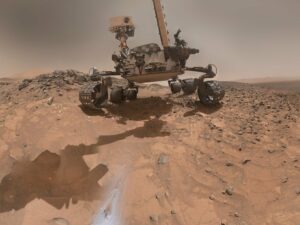
<h5 data-t="{&quot;n&quot;:&quot;blueLinks&quot;}">The InSight Mars lander has turned out to be a gift that keeps on giving. Even though its mission ended late last year, the data sent back to Earth by the lander has continued to provide new and exciting windows through which to investigate the red planet.</h5>
<h5 data-t="{&quot;n&quot;:&quot;blueLinks&quot;}">Recently, researchers studying InSight data discovered that Mars’s rotation is speeding up. Granted, the effect is small—the rate of spin is only increasing by about 4 milliarcseconds per year²—but Martian days are definitely getting shorter. The team published the details of this finding in the journal <em>Nature</em>.</h5>
<h5 data-t="{&quot;n&quot;:&quot;blueLinks&quot;}">Collecting the data necessary to see this change in action wasn’t easy. “What we’re looking for are variations that are just a few tens of centimetres over the course of a Martian year,” Sebastien Le Maistre, the lead author on the paper, said at the Royal Observatory of Belgium. “It takes a very long time and a lot of data to accumulate before we can even see these variations.”</h5>
<h5 class="continue-read-break" data-t="{&quot;n&quot;:&quot;blueLinks&quot;}">The project made use of measurements from InSight’s first 900 days on Mars—a long enough time frame to see changes on the scale of milliarcseconds per year—and put the lander’s Rotation and Interior Structure Experiment (RISE) instrument panel through its paces. NASA used its Deep Space Network to send a beam of radio waves out towards the InSight lander on our next-door neighbour planet. When the beam arrived, RISE bounced it back to Earth, where the beam was examined for tiny changes in frequency. Changes in frequency allowed the researchers to see changes in rotational speed.</h5>
<p data-t="{&quot;n&quot;:&quot;blueLinks&quot;}"><img decoding="async" class="wp-image-14045 aligncenter" src="https://spacespecialists.com/wp-content/uploads/2023/08/Mars2-300x225.jpg" alt="" width="617" height="463" srcset="https://spacespecialists.com/wp-content/uploads/2023/08/Mars2-300x225.jpg 300w, https://spacespecialists.com/wp-content/uploads/2023/08/Mars2-768x576.jpg 768w, https://spacespecialists.com/wp-content/uploads/2023/08/Mars2.jpg 1024w" sizes="(max-width: 617px) 100vw, 617px" /></p>
<h5 tabindex="-1" data-t="{&quot;n&quot;:&quot;blueLinks&quot;}" aria-expanded="true">Once the researchers were sure that the changes were due to rotational speed and not contamination—radio frequency can be shifted by things like water in our atmosphere or solar wind—they were able to see the speed change bright and clear.</h5>
<h5 tabindex="-1" data-t="{&quot;n&quot;:&quot;blueLinks&quot;}" aria-expanded="true">“It’s really cool to be able to get this latest measurement—and so precisely,” Bruce Banerdt, InSight’s principal investigator, said in a news release. “I’ve been involved in efforts to get a geophysical station like InSight onto Mars for a long time, and results like this make all those decades of work worth it.”</h5>
<h5 tabindex="-1" data-t="{&quot;n&quot;:&quot;blueLinks&quot;}" aria-expanded="true">Right now, the “why” of this change is still a mystery. But researchers have a few theories, including ice being present in greater amounts at the poles and what’s called “post-glacial rebound,” where land that was previously buried under layers of ice can rise once that ice is no longer present. Both of these circumstances would change the mass distribution of the planet, which can change its rotation.</h5>
<h5 tabindex="-1" data-t="{&quot;n&quot;:&quot;blueLinks&quot;}" aria-expanded="true">On top of all this, researchers were able to make and entirely different measurement with the RISE data. They clocked Mars’s wobble, which occurs due to the sloshing of molten material in its liquid core. This carefully quantified allowed the scientists to garner better insight into both the size, shape, and formation of the planet’s core.</h5>
<p tabindex="-1" data-t="{&quot;n&quot;:&quot;blueLinks&quot;}" aria-expanded="true"><img decoding="async" class="wp-image-14046 aligncenter" src="https://spacespecialists.com/wp-content/uploads/2023/08/Mars3-300x150.jpg" alt="" width="624" height="312" srcset="https://spacespecialists.com/wp-content/uploads/2023/08/Mars3-300x150.jpg 300w, https://spacespecialists.com/wp-content/uploads/2023/08/Mars3-1024x513.jpg 1024w, https://spacespecialists.com/wp-content/uploads/2023/08/Mars3-768x385.jpg 768w, https://spacespecialists.com/wp-content/uploads/2023/08/Mars3-1536x769.jpg 1536w, https://spacespecialists.com/wp-content/uploads/2023/08/Mars3-2048x1026.jpg 2048w, https://spacespecialists.com/wp-content/uploads/2023/08/Mars3-100x50.jpg 100w" sizes="(max-width: 624px) 100vw, 624px" /></p>
<h5 tabindex="-1" data-t="{&quot;n&quot;:&quot;blueLinks&quot;}" aria-expanded="true">“RISE’s data indicate the core’s shape cannot be explained by its rotation alone,” Attilio Rivoldini, one of the authors on the paper, said at the Royal Observatory of Belgium. “That shape requires regions of slightly higher or lower density buried deep within the mantle.”</h5>
<h5 tabindex="-1" data-t="{&quot;n&quot;:&quot;blueLinks&quot;}" aria-expanded="true">We as a species tend to enjoy our ever-growing population of Mars robots. We send them up, give them names, follow their progress, and cheer them on. They in turn send us back incredible data on a world we can’t yet visit ourselves. And InSight has more than proven that the retirement of one of our extra-planetary friends doesn’t mark the end of the gifts it will give.</h5>
]]></content>
		
					<link rel="replies" type="text/html" href="https://spacespecialists.com/planets-asteroids/suddenly-mars-is-spinning-faster-no-one-knows-why/#comments" thr:count="0" />
			<link rel="replies" type="application/atom+xml" href="https://spacespecialists.com/planets-asteroids/suddenly-mars-is-spinning-faster-no-one-knows-why/feed/atom/" thr:count="0" />
			<thr:total>0</thr:total>
			</entry>
		<entry>
		<author>
			<name>SpaceSpecialists</name>
					</author>

		<title type="html"><![CDATA[Coolest &#038; Craziest Sci-Fi Spacecraft from TV &#038; Movies]]></title>
		<link rel="alternate" type="text/html" href="https://spacespecialists.com/fun-stories/coolest-craziest-sci-fi-spacecraft/" />

		<id>https://spacespecialists.com/?p=13248</id>
		<updated>2024-01-17T00:42:27Z</updated>
		<published>2022-02-13T00:29:10Z</published>
		<category scheme="https://spacespecialists.com" term="Fun Stories" />
		<summary type="html"><![CDATA[The coolest and craziest spaceships in sci-fi Spaceships, starships, motherships, and good old flying saucers... Hollywood's sci-fi universe has provided us with some pretty awesome interstellar spacecraft over the years. But what's the most iconic spacecraft ever to have explored entertainment's solar system? &#160; Flying saucer The saucer that started it all, this one piloted by a humanoid called Gort,&#160;<a href="https://spacespecialists.com/fun-stories/coolest-craziest-sci-fi-spacecraft/" class="read-more">Continue Reading</a>]]></summary>

					<content type="html" xml:base="https://spacespecialists.com/fun-stories/coolest-craziest-sci-fi-spacecraft/"><![CDATA[<h1>The coolest and craziest spaceships in sci-fi</h1>
<p><strong>Spaceships, starships, motherships, and good old flying saucers... Hollywood's sci-fi universe has provided us with some pretty awesome interstellar spacecraft over the years. But what's the most iconic spacecraft ever to have explored entertainment's solar system?</strong></p>
<p>&nbsp;</p>
<p><img loading="lazy" decoding="async" class="wp-image-13250 aligncenter" src="https://spacespecialists.com/wp-content/uploads/2022/02/AAR1KDi-300x230.jpg" alt="" width="497" height="381" srcset="https://spacespecialists.com/wp-content/uploads/2022/02/AAR1KDi-300x230.jpg 300w, https://spacespecialists.com/wp-content/uploads/2022/02/AAR1KDi.jpg 543w" sizes="(max-width: 497px) 100vw, 497px" /></p>
<h2 class="gallery-title-text"><strong>Flying saucer</strong></h2>
<p class="gallery-title-text"><strong>The saucer that started it all, this one piloted by a humanoid called Gort, 'The Day the Earth Stood Still' (1951) is an early foray by Hollywood into the science-fiction genre.</strong></p>
<p>&nbsp;</p>
<p><img loading="lazy" decoding="async" class="wp-image-13251 aligncenter" src="https://spacespecialists.com/wp-content/uploads/2022/02/AAR1MAK-300x200.jpg" alt="" width="497" height="331" srcset="https://spacespecialists.com/wp-content/uploads/2022/02/AAR1MAK-300x200.jpg 300w, https://spacespecialists.com/wp-content/uploads/2022/02/AAR1MAK.jpg 625w" sizes="(max-width: 497px) 100vw, 497px" /></p>
<div class="body-text">
<div class="expand">
<h2 class="gallery-title-text"><strong>Millennium Falcon</strong></h2>
<p class="gallery-title-text"><strong>While Han Solo's modified YT-1300 Correlian light freighter's exterior looks worn and shabby, the Millennium Falcon <span style="font-size: 16px;">is nonetheless one of the fastest vessels in the galaxy, and an iconic 'Star Wars' spaceship</span><span style="font-size: 16px;">.</span></strong></p>
<p>&nbsp;</p>
<p><img loading="lazy" decoding="async" class="wp-image-13252 aligncenter" src="https://spacespecialists.com/wp-content/uploads/2022/02/AAR1FSA-300x160.jpg" alt="" width="488" height="260" srcset="https://spacespecialists.com/wp-content/uploads/2022/02/AAR1FSA-300x160.jpg 300w, https://spacespecialists.com/wp-content/uploads/2022/02/AAR1FSA-768x410.jpg 768w, https://spacespecialists.com/wp-content/uploads/2022/02/AAR1FSA.jpg 780w" sizes="(max-width: 488px) 100vw, 488px" /></p>
<div class="body-text">
<div class="expand">
<h2 class="gallery-title-text"><strong>USS Enterprise</strong></h2>
<p class="gallery-title-text"><strong>The starship USS <em style="font-size: 16px;">Enterprise</em><span style="font-size: 16px;"> first appeared on the small screen in 1966 in '</span><a style="font-size: 16px;" tabindex="0" href="https://www.starsinsider.com/movies/378601/long-running-film-franchises-we-love" target="_blank" rel="noopener" data-id="71" data-m="{&quot;i&quot;:71,&quot;p&quot;:50,&quot;n&quot;:&quot;partnerLink&quot;,&quot;y&quot;:24,&quot;o&quot;:21}">Star Trek</a><span style="font-size: 16px;">,' designated as NCC-1701. Identified as one of the best-designed and most influential science fiction spacecraft of all time, the vessel has undergone several modifications over the decades. Pictured from 'Star Trek' (2009) is the D class version.</span></strong></p>
<p>&nbsp;</p>
<p><img loading="lazy" decoding="async" class="wp-image-13253 aligncenter" src="https://spacespecialists.com/wp-content/uploads/2022/02/AAR1D4g-300x153.jpg" alt="" width="480" height="245" srcset="https://spacespecialists.com/wp-content/uploads/2022/02/AAR1D4g-300x153.jpg 300w, https://spacespecialists.com/wp-content/uploads/2022/02/AAR1D4g-768x391.jpg 768w, https://spacespecialists.com/wp-content/uploads/2022/02/AAR1D4g-100x50.jpg 100w, https://spacespecialists.com/wp-content/uploads/2022/02/AAR1D4g.jpg 799w" sizes="(max-width: 480px) 100vw, 480px" /></p>
<h2 class="gallery-title-text"><strong>Discovery One</strong></h2>
<p class="gallery-title-text"><strong>The nuclear-powered spaceship 'Discovery One' from '<a style="font-size: 16px;" tabindex="0" href="https://www.starsinsider.com/movies/346241/how-2001-a-space-odyssey-predicted-the-future-more-than-50-years-ago" target="_blank" rel="noopener" data-id="76" data-m="{&quot;i&quot;:76,&quot;p&quot;:50,&quot;n&quot;:&quot;partnerLink&quot;,&quot;y&quot;:24,&quot;o&quot;:26}">2001: A Space Odyssey</a><span style="font-size: 16px;">' (1968) provided the stage for much of Stanley Kubrick's epic interplanetary saga. It's crewed by just two men, and controlled by the AI on-board computer HAL 9000.</span></strong></p>
<p>&nbsp;</p>
<p><img loading="lazy" decoding="async" class="wp-image-13254 aligncenter" src="https://spacespecialists.com/wp-content/uploads/2022/02/AAR1P4W-300x191.jpg" alt="" width="474" height="302" srcset="https://spacespecialists.com/wp-content/uploads/2022/02/AAR1P4W-300x191.jpg 300w, https://spacespecialists.com/wp-content/uploads/2022/02/AAR1P4W.jpg 653w" sizes="(max-width: 474px) 100vw, 474px" /></p>
<h2 class="gallery-title-text"><strong>Prometheus</strong></h2>
<p class="gallery-title-text"><strong>'Prometheus' (2012) is named for the scientific vessel <em style="font-size: 16px;">Prometheus</em><span style="font-size: 16px;">, which lands on a distant moon, LV-426, only for its crew to discover a threat that could cause the extinction of the human species.</span></strong></p>
<p>&nbsp;</p>
</div>
</div>
<p><img loading="lazy" decoding="async" class="wp-image-13255 aligncenter" src="https://spacespecialists.com/wp-content/uploads/2022/02/AAR1D4o-300x189.jpg" alt="" width="471" height="297" srcset="https://spacespecialists.com/wp-content/uploads/2022/02/AAR1D4o-300x189.jpg 300w, https://spacespecialists.com/wp-content/uploads/2022/02/AAR1D4o.jpg 661w" sizes="(max-width: 471px) 100vw, 471px" /></p>
<h2 class="gallery-title-text"><strong>Alien slave ship</strong></h2>
<p class="gallery-title-text"><strong>The alien space ship hovering over Johannesburg in 'District 9' (2009) looks worn and used, appearing like a dirty and greasy hubcap over the South African capital. But looks can deceive!</strong></p>
<p>&nbsp;</p>
<p><img loading="lazy" decoding="async" class="wp-image-13256 aligncenter" src="https://spacespecialists.com/wp-content/uploads/2022/02/AAR1MB7-300x209.jpg" alt="" width="472" height="329" srcset="https://spacespecialists.com/wp-content/uploads/2022/02/AAR1MB7-300x209.jpg 300w, https://spacespecialists.com/wp-content/uploads/2022/02/AAR1MB7.jpg 597w" sizes="(max-width: 472px) 100vw, 472px" /></p>
<h2 class="gallery-title-text"><strong>Engineer spaceship</strong></h2>
<p class="gallery-title-text"><strong>'Alien' (1979) and later 'Prometheus' (2012) feature what first appears to be an enormous artificial structure embedded on the surface of the remote moon, LV-426. Closer examination, however, reveals it to be a long defunct spaceship belonging to the "Engineers," colossal beings that represent humanity's forerunners.</strong></p>
<p>&nbsp;</p>
<p><img loading="lazy" decoding="async" class="wp-image-13257 aligncenter" src="https://spacespecialists.com/wp-content/uploads/2022/02/AAR1FSZ-300x196.jpg" alt="" width="470" height="307" srcset="https://spacespecialists.com/wp-content/uploads/2022/02/AAR1FSZ-300x196.jpg 300w, https://spacespecialists.com/wp-content/uploads/2022/02/AAR1FSZ.jpg 638w" sizes="(max-width: 470px) 100vw, 470px" /></p>
<h2 class="gallery-title-text"><strong>Imperial Star Destroyer</strong></h2>
<p class="gallery-title-text"><strong>The Imperial Star Destroyer made its debut in 'Star Wars: Episode IV - A New Hope' (1977) with its  pursuit of a Corellian Corvette, often cited as a milestone in special effects history. The Empire's signature vessel continued to menace the rebel alliance throughout the original trilogy.</strong></p>
<p>&nbsp;</p>
<p><img loading="lazy" decoding="async" class="wp-image-13258 aligncenter" src="https://spacespecialists.com/wp-content/uploads/2022/02/AAR1KE8-300x216.jpg" alt="" width="469" height="338" srcset="https://spacespecialists.com/wp-content/uploads/2022/02/AAR1KE8-300x216.jpg 300w, https://spacespecialists.com/wp-content/uploads/2022/02/AAR1KE8.jpg 577w" sizes="(max-width: 469px) 100vw, 469px" /></p>
<h2 class="gallery-title-text"><strong>Saucer ship</strong></h2>
<p class="gallery-title-text"><strong>Flying saucers on steroids best describes the monstrous vessels dispatched by an alien mothership orbiting Earth to wreak havoc on major cities around the world in '<a style="font-size: 16px;" tabindex="0" href="https://www.starsinsider.com/lifestyle/377121/travel-back-in-time-with-these-vintage-fourth-of-july-photos" target="_blank" rel="noopener" data-id="97" data-m="{&quot;i&quot;:97,&quot;p&quot;:50,&quot;n&quot;:&quot;partnerLink&quot;,&quot;y&quot;:24,&quot;o&quot;:47}">Independence</a><span style="font-size: 16px;"> Day' (1996).</span></strong></p>
<p>&nbsp;</p>
<p><img loading="lazy" decoding="async" class="wp-image-13259 aligncenter" src="https://spacespecialists.com/wp-content/uploads/2022/02/AAR1tY0-300x245.jpg" alt="" width="468" height="382" srcset="https://spacespecialists.com/wp-content/uploads/2022/02/AAR1tY0-300x245.jpg 300w, https://spacespecialists.com/wp-content/uploads/2022/02/AAR1tY0.jpg 509w" sizes="(max-width: 468px) 100vw, 468px" /></p>
<div class="body-text">
<div class="expand">
<h2 class="gallery-title-text"><strong>Pan Am space clipper</strong></h2>
<p class="gallery-title-text"><strong>The needle-like Pan Am space clipper shoots out of the monumental rotating space wheel station in a scene from '2001: A Space Odyssey' (1968).</strong></p>
<p>&nbsp;</p>
<p><img loading="lazy" decoding="async" class="wp-image-13261 aligncenter" src="https://spacespecialists.com/wp-content/uploads/2022/02/AAR1FTb-271x300.jpg" alt="" width="467" height="517" srcset="https://spacespecialists.com/wp-content/uploads/2022/02/AAR1FTb-271x300.jpg 271w, https://spacespecialists.com/wp-content/uploads/2022/02/AAR1FTb.jpg 376w" sizes="(max-width: 467px) 100vw, 467px" /></p>
<h2 class="gallery-title-text"><strong>TIE Advanced x1</strong></h2>
<p class="gallery-title-text"><strong>The last thing you'd want to see in your rear view mirror, the TIE fighter was the only spaceship capable of taking on the rebel alliance's X-Wing starfighter. Darth Vader's distinct TIE Advanced x1 (pictured) in 'Star Wars: Episode IV - A New Hope' (1977) was especially menacing.</strong></p>
<p>&nbsp;</p>
<p><img loading="lazy" decoding="async" class="wp-image-13262 aligncenter" src="https://spacespecialists.com/wp-content/uploads/2022/02/AAR1P5i-300x194.jpg" alt="" width="464" height="300" srcset="https://spacespecialists.com/wp-content/uploads/2022/02/AAR1P5i-300x194.jpg 300w, https://spacespecialists.com/wp-content/uploads/2022/02/AAR1P5i.jpg 643w" sizes="(max-width: 464px) 100vw, 464px" /></p>
<h2 class="gallery-title-text"><strong>X-Wing starfighter</strong></h2>
<p class="gallery-title-text"><strong>In fact, the original 'Star Wars' (1977) introduced cinema audiences to an amazing array of incredible characters, and a fleet of truly remarkable spacecraft, including the swift and versatile rebel alliance X-Wing starfighter.</strong></p>
<p>&nbsp;</p>
<p><img loading="lazy" decoding="async" class="wp-image-13263 aligncenter" src="https://spacespecialists.com/wp-content/uploads/2022/02/AAR1FTf-300x223.jpg" alt="" width="459" height="341" srcset="https://spacespecialists.com/wp-content/uploads/2022/02/AAR1FTf-300x223.jpg 300w, https://spacespecialists.com/wp-content/uploads/2022/02/AAR1FTf.jpg 559w" sizes="(max-width: 459px) 100vw, 459px" /></p>
<h2 class="gallery-title-text"><strong>USS Reliant</strong></h2>
<p class="gallery-title-text"><strong>'Star Trek II: The Wrath of Khan' (1982) saw the USS <em style="font-size: 16px;">Enterprise</em><span style="font-size: 16px;"> battling one of its own, the </span><em style="font-size: 16px;">USS Reliant</em><span style="font-size: 16px;">, which has been commandeered by Khan Noonien Singhf. </span></strong></p>
<p>&nbsp;</p>
<p><img loading="lazy" decoding="async" class="wp-image-13264 aligncenter" src="https://spacespecialists.com/wp-content/uploads/2022/02/AAR1FTh-300x219.jpg" alt="" width="458" height="334" srcset="https://spacespecialists.com/wp-content/uploads/2022/02/AAR1FTh-300x219.jpg 300w, https://spacespecialists.com/wp-content/uploads/2022/02/AAR1FTh.jpg 571w" sizes="(max-width: 458px) 100vw, 458px" /></p>
<h2 class="gallery-title-text"><strong>Endurance and Ranger</strong></h2>
<p class="gallery-title-text"><strong>'Interstellar' (2014) features the <em style="font-size: 16px;">Endurance,</em><span style="font-size: 16px;"> an interstellar space exploration vehicle. Pictured is the </span><em style="font-size: 16px;">Ranger</em><span style="font-size: 16px;">, the ship's shuttlecraft, about to make landfall on a mysterious ocean-filled planet.</span></strong></p>
<p>&nbsp;</p>
<p><img loading="lazy" decoding="async" class="wp-image-13265 aligncenter" src="https://spacespecialists.com/wp-content/uploads/2022/02/AATzDIQ-300x142.jpg" alt="" width="463" height="219" srcset="https://spacespecialists.com/wp-content/uploads/2022/02/AATzDIQ-300x142.jpg 300w, https://spacespecialists.com/wp-content/uploads/2022/02/AATzDIQ-768x363.jpg 768w, https://spacespecialists.com/wp-content/uploads/2022/02/AATzDIQ.jpg 799w" sizes="(max-width: 463px) 100vw, 463px" /></p>
<h2 class="gallery-title-text"><strong>Jedi starfighter</strong></h2>
<p class="gallery-title-text"><strong>A Jedi starfighter used by Obi-Wan in 'Star Wars: Attack of the Clones' (2002).</strong></p>
<p>&nbsp;</p>
<p><img loading="lazy" decoding="async" class="wp-image-13267 aligncenter" src="https://spacespecialists.com/wp-content/uploads/2022/02/AAR1D51-300x213.jpg" alt="" width="463" height="329" srcset="https://spacespecialists.com/wp-content/uploads/2022/02/AAR1D51-300x213.jpg 300w, https://spacespecialists.com/wp-content/uploads/2022/02/AAR1D51.jpg 585w" sizes="(max-width: 463px) 100vw, 463px" /></p>
<h2 class="gallery-title-text"><strong>Cepheus</strong></h2>
<p class="gallery-title-text"><strong>Roy McBride (Brad Pitt), a major with US Space Command, travels to Mars on board the <em style="font-size: 16px;">Cepheus</em><span style="font-size: 16px;"> in 'Ad Astra' (2019). But a distress signal received by the spaceship diverts its course.</span></strong></p>
<p>&nbsp;</p>
<p><img loading="lazy" decoding="async" class="wp-image-13268 aligncenter" src="https://spacespecialists.com/wp-content/uploads/2022/02/AAR1KEN-300x170.jpg" alt="" width="464" height="263" srcset="https://spacespecialists.com/wp-content/uploads/2022/02/AAR1KEN-300x170.jpg 300w, https://spacespecialists.com/wp-content/uploads/2022/02/AAR1KEN.jpg 733w" sizes="(max-width: 464px) 100vw, 464px" /></p>
<h2 class="gallery-title-text"><strong>Leonov</strong></h2>
<p class="gallery-title-text"><strong>The Soviet spacecraft <em style="font-size: 16px;">Leonov</em><span style="font-size: 16px;"> approaches the crippled </span><em style="font-size: 16px;">Discovery One</em><span style="font-size: 16px;"> in orbit around Jupiter's moon Io in this scene from '2010: The Year We Make Contact' (1984), the </span><a style="font-size: 16px;" tabindex="0" href="https://www.starsinsider.com/movies/451172/sequels-and-prequels-that-made-fans-wait-a-long-time" target="_blank" rel="noopener" data-id="130" data-m="{&quot;i&quot;:130,&quot;p&quot;:50,&quot;n&quot;:&quot;partnerLink&quot;,&quot;y&quot;:24,&quot;o&quot;:80}">sequel</a><span style="font-size: 16px;"> to '2001: A Space Odyssey.'</span></strong></p>
<p>&nbsp;</p>
<p><img loading="lazy" decoding="async" class="wp-image-13269 aligncenter" src="https://spacespecialists.com/wp-content/uploads/2022/02/AAR1JaV-300x244.jpg" alt="" width="464" height="377" srcset="https://spacespecialists.com/wp-content/uploads/2022/02/AAR1JaV-300x244.jpg 300w, https://spacespecialists.com/wp-content/uploads/2022/02/AAR1JaV.jpg 512w" sizes="(max-width: 464px) 100vw, 464px" /></p>
<h2 class="gallery-title-text"><strong>Heptapod ship</strong></h2>
<p class="gallery-title-text"><strong>The alien heptapod ships that hover over various locations around the Earth in 'Arrival' (2016) appear awesomely benign: the aliens' 'weapon' is their language, and humanity is charged with decoding its meaning.</strong></p>
<p>&nbsp;</p>
<p><img loading="lazy" decoding="async" class="wp-image-13270 aligncenter" src="https://spacespecialists.com/wp-content/uploads/2022/02/AAR1KEZ-300x193.jpg" alt="" width="465" height="299" srcset="https://spacespecialists.com/wp-content/uploads/2022/02/AAR1KEZ-300x193.jpg 300w, https://spacespecialists.com/wp-content/uploads/2022/02/AAR1KEZ.jpg 647w" sizes="(max-width: 465px) 100vw, 465px" /></p>
<h2 class="gallery-title-text"><strong>Bubble ship</strong></h2>
<p class="gallery-title-text"><strong>The Bubble ship that Jack Harper (Tom Cruise) pilots throughout 'Oblivion' (2013) is more cloud scraper that spaceship. But it's fast, highly manoeuvrable, and a genuine sci-fi screen-pleaser.</strong></p>
<p>&nbsp;</p>
<p><img loading="lazy" decoding="async" class="wp-image-13271 aligncenter" src="https://spacespecialists.com/wp-content/uploads/2022/02/AAR1KF4-300x228.jpg" alt="" width="464" height="353" srcset="https://spacespecialists.com/wp-content/uploads/2022/02/AAR1KF4-300x228.jpg 300w, https://spacespecialists.com/wp-content/uploads/2022/02/AAR1KF4.jpg 547w" sizes="(max-width: 464px) 100vw, 464px" /></p>
<div class="body-text">
<div class="expand">
<h2 class="gallery-title-text"><strong>Thunderbird 3</strong></h2>
<p class="gallery-title-text"><strong>The hit 1960's British TV series 'Thunderbirds' featured five <em style="font-size: 16px;">Thunderbird</em><span style="font-size: 16px;"> machines, one of which, </span><em style="font-size: 16px;">Thunderbird 3</em><span style="font-size: 16px;">, was a red single-stage-to-orbit spacecraft. The vessel was given a makeover in 'Thunderbirds' (2004), based on the original show.</span></strong></p>
<p>&nbsp;</p>
<p><img loading="lazy" decoding="async" class="wp-image-13272 aligncenter" src="https://spacespecialists.com/wp-content/uploads/2022/02/AAR1KFe-300x199.jpg" alt="" width="461" height="306" srcset="https://spacespecialists.com/wp-content/uploads/2022/02/AAR1KFe-300x199.jpg 300w, https://spacespecialists.com/wp-content/uploads/2022/02/AAR1KFe.jpg 627w" sizes="(max-width: 461px) 100vw, 461px" /></p>
<h2 class="gallery-title-text"><strong>USS Cygnus</strong></h2>
<p class="gallery-title-text"><strong>The USS <em style="font-size: 16px;">Cygnus</em><span style="font-size: 16px;"> makes its appearance in 'The Black Hole' (1979) as an apparently abandoned and long-lost spaceship that's rediscovered near a black hole.</span></strong></p>
<p>&nbsp;</p>
<p><img loading="lazy" decoding="async" class="wp-image-13273 aligncenter" src="https://spacespecialists.com/wp-content/uploads/2022/02/AAR1KFo-300x220.jpg" alt="" width="458" height="336" srcset="https://spacespecialists.com/wp-content/uploads/2022/02/AAR1KFo-300x220.jpg 300w, https://spacespecialists.com/wp-content/uploads/2022/02/AAR1KFo.jpg 566w" sizes="(max-width: 458px) 100vw, 458px" /></p>
<h2 class="gallery-title-text"><strong>Gunstar</strong></h2>
<p class="gallery-title-text"><strong>The aptly-named Gunstar featured in 'The Last Starfighter' (1984) was just that, a specialist Starfighter spaceship bristling with weaponry.</strong></p>
<p>&nbsp;</p>
<p><img loading="lazy" decoding="async" class="wp-image-13274 aligncenter" src="https://spacespecialists.com/wp-content/uploads/2022/02/AAR1FTJ-300x202.jpg" alt="" width="454" height="306" srcset="https://spacespecialists.com/wp-content/uploads/2022/02/AAR1FTJ-300x202.jpg 300w, https://spacespecialists.com/wp-content/uploads/2022/02/AAR1FTJ.jpg 617w" sizes="(max-width: 454px) 100vw, 454px" /></p>
<h2></h2>
<h2 class="gallery-title-text"><strong>NSEA-Protector</strong></h2>
<p class="gallery-title-text"><strong>The Earth's most powerful interstellar spacecraft, the NSEA-<em style="font-size: 16px;">Protector</em><span style="font-size: 16px;"> seen in 'Galaxy Quest' (1999), served as the flagship for the National Space Exploration Administration. Its crew are seen assembled on the vessel's bridge.</span></strong></p>
<p>&nbsp;</p>
<p><img loading="lazy" decoding="async" class="wp-image-13275 aligncenter" src="https://spacespecialists.com/wp-content/uploads/2022/02/AAR1FTL-291x300.jpg" alt="" width="452" height="466" srcset="https://spacespecialists.com/wp-content/uploads/2022/02/AAR1FTL-291x300.jpg 291w, https://spacespecialists.com/wp-content/uploads/2022/02/AAR1FTL.jpg 404w" sizes="(max-width: 452px) 100vw, 452px" /></p>
<div class="gallerydata" data-aop="gallery_onepage_slidedata">
<div class="body-text">
<div class="expand">
<h2 class="gallery-title-text"><strong>TARDIS</strong></h2>
<p class="gallery-title-text"><strong>The most unlikely spaceship in the universe, the TRADIS is a time machine in the shape of a vintage police telephone box that the Doctor uses in the British television series 'Dr Who' to planet-hop. Its name is an acronym, the meaning of which is "Time And Relative Dimension In Space."</strong></p>
<p>&nbsp;</p>
<p><img loading="lazy" decoding="async" class="wp-image-13276 aligncenter" src="https://spacespecialists.com/wp-content/uploads/2022/02/AAR1D5D-300x206.jpg" alt="" width="449" height="308" srcset="https://spacespecialists.com/wp-content/uploads/2022/02/AAR1D5D-300x206.jpg 300w, https://spacespecialists.com/wp-content/uploads/2022/02/AAR1D5D.jpg 607w" sizes="(max-width: 449px) 100vw, 449px" /></p>
<h2 class="gallery-title-text"><strong>Mothership</strong></h2>
<p class="gallery-title-text"><strong>The closing scenes of 'Close Encounters of the Third Kind' (1977) marks the appearance of the gigantic alien mothership, from which the curious extra-terrestrials emerge to take a select group of earthlings on a trip of a lifetime.</strong></p>
<p>&nbsp;</p>
<p><img loading="lazy" decoding="async" class="wp-image-13277 aligncenter" src="https://spacespecialists.com/wp-content/uploads/2022/02/AAR1MCw-300x202.jpg" alt="" width="443" height="298" srcset="https://spacespecialists.com/wp-content/uploads/2022/02/AAR1MCw-300x202.jpg 300w, https://spacespecialists.com/wp-content/uploads/2022/02/AAR1MCw.jpg 618w" sizes="(max-width: 443px) 100vw, 443px" /></p>
<h2 class="gallery-title-text"><strong>Nostromo</strong></h2>
<p class="gallery-title-text"><strong>In 'Alien' (1979), the commercial space tug USCSS <em style="font-size: 16px;">Nostromo</em> becomes a hunting ground as its terrified crew attempt to track down and destroy an aggressive and deadly extra-terrestrial. The <em style="font-size: 16px;">Nostromo</em><span style="font-size: 16px;">'s rusty interior is huge, and offers up plenty of dark places for the unwelcome alien to hide in.</span></strong></p>
<p>&nbsp;</p>
</div>
</div>
</div>
</div>
</div>
<div class="body-text">
<div data-image-size="1920,1315" data-id="159" data-m="{&quot;i&quot;:159,&quot;p&quot;:50,&quot;n&quot;:&quot;image26&quot;,&quot;y&quot;:14,&quot;o&quot;:109}">
<p><img loading="lazy" decoding="async" class="wp-image-13279 aligncenter" src="https://spacespecialists.com/wp-content/uploads/2022/02/AAR1MCB-300x206.jpg" alt="" width="430" height="295" srcset="https://spacespecialists.com/wp-content/uploads/2022/02/AAR1MCB-300x206.jpg 300w, https://spacespecialists.com/wp-content/uploads/2022/02/AAR1MCB.jpg 606w" sizes="(max-width: 430px) 100vw, 430px" /></p>
<h2 class="gallery-title-text"><strong>USS Sulaco</strong></h2>
<p class="gallery-title-text"><strong>The military load vehicle USS <em style="font-size: 16px;">Sulaco</em><span style="font-size: 16px;"> in 'Aliens' (1986) is used to transport United Systems Colonial Marines to investigate the loss of communication with a colony of humans on LV-426.</span></strong></p>
<p>&nbsp;</p>
<p><img loading="lazy" decoding="async" class="wp-image-13280 aligncenter" src="https://spacespecialists.com/wp-content/uploads/2022/02/AAR1Jc5-300x240.jpg" alt="" width="428" height="342" srcset="https://spacespecialists.com/wp-content/uploads/2022/02/AAR1Jc5-300x240.jpg 300w, https://spacespecialists.com/wp-content/uploads/2022/02/AAR1Jc5.jpg 519w" sizes="(max-width: 428px) 100vw, 428px" /></p>
<h2 class="gallery-title-text"><strong>Eagle 5</strong></h2>
<p class="gallery-title-text"><strong>Mel Brooks' space opera parody 'Spaceballs' (1987) features the zany-looking <em style="font-size: 16px;">Eagle 5</em><span style="font-size: 16px;">, a Winnebago spaceship that helped propel the movie into the cult classic realm.</span></strong></p>
<p>&nbsp;</p>
<p class="gallery-title-text"><strong>Sources: (<a tabindex="0" href="https://www.newyorker.com/magazine/2018/04/23/2001-a-space-odyssey-what-it-means-and-how-it-was-made" target="_blank" rel="noopener" data-id="179" data-m="{&quot;i&quot;:179,&quot;p&quot;:50,&quot;n&quot;:&quot;partnerLink&quot;,&quot;y&quot;:24,&quot;o&quot;:129}">The New Yorker</a>) (<a tabindex="0" href="https://www.britannica.com/topic/The-Day-the-Earth-Stood-Still-film-1951" target="_blank" rel="noopener" data-id="180" data-m="{&quot;i&quot;:180,&quot;p&quot;:50,&quot;n&quot;:&quot;partnerLink&quot;,&quot;y&quot;:24,&quot;o&quot;:130}">Britannica</a>)</strong></p>
</div>
</div>
</div>
</div>
</div>
</div>
]]></content>
		
					<link rel="replies" type="text/html" href="https://spacespecialists.com/fun-stories/coolest-craziest-sci-fi-spacecraft/#comments" thr:count="2" />
			<link rel="replies" type="application/atom+xml" href="https://spacespecialists.com/fun-stories/coolest-craziest-sci-fi-spacecraft/feed/atom/" thr:count="2" />
			<thr:total>2</thr:total>
			</entry>
		<entry>
		<author>
			<name>SpaceSpecialists</name>
					</author>

		<title type="html"><![CDATA[Future AI &#038; Robotics in Space Summit (Fair Space)]]></title>
		<link rel="alternate" type="text/html" href="https://spacespecialists.com/events/future-ai-robotics-in-space-fair-space-robotics-summit/" />

		<id>https://spacespecialists.com/?p=13090</id>
		<updated>2024-01-17T00:44:09Z</updated>
		<published>2022-01-12T13:40:32Z</published>
		<category scheme="https://spacespecialists.com" term="Events" /><category scheme="https://spacespecialists.com" term="News" /><category scheme="https://spacespecialists.com" term="robotics" />
		<summary type="html"><![CDATA[FAIR-SPACE Robotics Summit Research and Commercialisation Media City, Salford, Manchester, UK 16th February 2022  Hybrid, In-Person and Online Event https://www.fairspacesummit.com/ Future AI &#38; Robotics in Space (FAIR-SPACE) is teaming up with the UK Space Agency (UKSA), Satellite Applications Catapult, National Robotics Network (NRN), Innovate UK &#38; the Engineering and Physical Sciences Research Council (EPSRC) to host a unique one-day international&#160;<a href="https://spacespecialists.com/events/future-ai-robotics-in-space-fair-space-robotics-summit/" class="read-more">Continue Reading</a>]]></summary>

					<content type="html" xml:base="https://spacespecialists.com/events/future-ai-robotics-in-space-fair-space-robotics-summit/"><![CDATA[<h1 style="text-align: center;"><strong>FAIR-SPACE Robotics Summit</strong></h1>
<h3 style="text-align: center;"><strong>Research and Commercialisation</strong></h3>
<h3 style="text-align: center;"><strong>Media City, Salford, Manchester, UK</strong></h3>
<h3 style="text-align: center;"><strong><span class="color_11">16th February 2022</span><span class="color_28"> </span></strong></h3>
<h3 style="text-align: center;"><strong>Hybrid, In-Person and Online Event</strong></h3>
<p style="text-align: center;"><strong><a href="https://www.fairspacesummit.com/">https://www.fairspacesummit.com/</a></strong></p>
<p><img loading="lazy" decoding="async" class="size-medium wp-image-13110 aligncenter" src="https://spacespecialists.com/wp-content/uploads/2022/01/17-300x133.png" alt="" width="300" height="133" srcset="https://spacespecialists.com/wp-content/uploads/2022/01/17-300x133.png 300w, https://spacespecialists.com/wp-content/uploads/2022/01/17.png 337w" sizes="(max-width: 300px) 100vw, 300px" /></p>
<p class="font_8"><span class="color_12">Future AI &amp; Robotics in Space (FAIR-SPACE) is teaming up with the UK Space Agency (UKSA), Satellite Applications Catapult, National Robotics Network (NRN), Innovate UK &amp; the Engineering and Physical Sciences Research Council (EPSRC) to host a unique one-day international summit on the key influences and core questions advancing innovation in space robotics.</span></p>
<p><img loading="lazy" decoding="async" class="size-medium wp-image-13114 aligncenter" src="https://spacespecialists.com/wp-content/uploads/2022/01/FAIR-SPACE_Logo_Col-300x75.png" alt="" width="300" height="75" srcset="https://spacespecialists.com/wp-content/uploads/2022/01/FAIR-SPACE_Logo_Col-300x75.png 300w, https://spacespecialists.com/wp-content/uploads/2022/01/FAIR-SPACE_Logo_Col.png 500w" sizes="(max-width: 300px) 100vw, 300px" /></p>
<p style="text-align: center;"><strong><a href="https://www.fairspacehub.org/">https://www.fairspacehub.org/</a></strong></p>
<p>&nbsp;</p>
<p><img loading="lazy" decoding="async" class="size-medium wp-image-13113 aligncenter" src="https://spacespecialists.com/wp-content/uploads/2022/01/UKSA_logo_RGB_HomePage-300x84.jpg" alt="" width="300" height="84" srcset="https://spacespecialists.com/wp-content/uploads/2022/01/UKSA_logo_RGB_HomePage-300x84.jpg 300w, https://spacespecialists.com/wp-content/uploads/2022/01/UKSA_logo_RGB_HomePage.jpg 460w" sizes="(max-width: 300px) 100vw, 300px" /></p>
<p style="text-align: center;"><strong><a href="https://www.gov.uk/government/organisations/uk-space-agency">https://www.gov.uk/government/organisations/uk-space-agency</a></strong></p>
<p>&nbsp;</p>
<p><img loading="lazy" decoding="async" class="size-full wp-image-13112 aligncenter" src="https://spacespecialists.com/wp-content/uploads/2022/01/logo-sac.png" alt="" width="243" height="80" /></p>
<p style="text-align: center;"><strong><a href="https://sa.catapult.org.uk/">https://sa.catapult.org.uk/</a></strong></p>
<p>&nbsp;</p>
<p style="text-align: center;"><img loading="lazy" decoding="async" class="alignnone size-full wp-image-13120" src="https://spacespecialists.com/wp-content/uploads/2022/01/cropped-NEW-NRN-Logo.png" alt="" width="247" height="149" /></p>
<p style="text-align: center;"><strong><a href="http://www.nationalroboticsnetwork.org/">http://www.nationalroboticsnetwork.org/</a></strong></p>
<p>&nbsp;</p>
<p style="text-align: center;"><img loading="lazy" decoding="async" class="alignnone size-full wp-image-13136" src="https://spacespecialists.com/wp-content/uploads/2022/01/our-council-logo-innovate-uk.png" alt="" width="245" height="204" /></p>
<p style="text-align: center;"><strong><a href="https://www.ukri.org/councils/innovate-uk/">https://www.ukri.org/councils/innovate-uk/</a></strong></p>
<p>&nbsp;</p>
<p style="text-align: center;"><img loading="lazy" decoding="async" class="alignnone size-medium wp-image-13137" src="https://spacespecialists.com/wp-content/uploads/2022/01/logo-epsrc-300x75.png" alt="" width="300" height="75" srcset="https://spacespecialists.com/wp-content/uploads/2022/01/logo-epsrc-300x75.png 300w, https://spacespecialists.com/wp-content/uploads/2022/01/logo-epsrc.png 321w" sizes="(max-width: 300px) 100vw, 300px" /></p>
<p style="text-align: center;"><strong><a href="https://epsrc.ukri.org/">https://epsrc.ukri.org/</a></strong></p>
<p>&nbsp;</p>
<h2 style="text-align: center;"><strong>Agenda</strong></h2>
<p style="text-align: center;"><img loading="lazy" decoding="async" class="alignnone size-medium wp-image-13118" src="https://spacespecialists.com/wp-content/uploads/2022/01/20-300x117.png" alt="" width="300" height="117" srcset="https://spacespecialists.com/wp-content/uploads/2022/01/20-300x117.png 300w, https://spacespecialists.com/wp-content/uploads/2022/01/20-768x301.png 768w, https://spacespecialists.com/wp-content/uploads/2022/01/20.png 815w" sizes="(max-width: 300px) 100vw, 300px" /></p>
<p style="text-align: center;"><strong><a href="https://www.fairspacesummit.com/agenda">https://www.fairspacesummit.com/agenda</a></strong></p>
<p><span class="color_12">Acknowledging an exciting time for the space sector, the agenda showcases cutting-edge research inspired by the exacting demands of working in this extreme environment—and the transformative impact to come from developments in robotics and autonomous systems.</span></p>
<p>The Future AI &amp; Robotics in Space (FAIR-SPACE) Robotics Summit has been divided into two halves.</p>
<p>Morning Sessions will feature advances from the FAIR-SPACE research and innovation hub founded by six UK Universities (University of Surrey, University of Salford, Imperial College London, University of Edinburgh, University of Liverpool/Manchester and University of Warwick).</p>
<p>The day will then move on to three Panel Forums designed to debate the challenges and future requirements for realising the full potential of the sector.</p>
<ol>
<li><strong>Space Industry Roadmap Forum</strong></li>
<li><strong>Industry Cross-Sector Forum</strong></li>
<li><strong>Skills &amp; Training Forum</strong></li>
</ol>
<p class="font_8"><span class="color_12">Bringing together academic, government and commercial innovators from around the world the aim is to chart a roadmap for the development. Advances to be featured include new capabilities for autonomous systems, wearables that enhance astronaut safety, intelligent human to robotic teleoperation, and state of the art systems engineering.</span></p>
<p class="font_8"><span class="color_12"> Staged discussions will explore and get beyond ambitions for space exploration: anticipating how space infrastructure will continually enhance our knowledge of the earth and serve the many industries that progressively impact our everyday lives; </span><span class="color_12">They will also examine the many industrial opportunities to apply space robotics terrestrially.</span></p>
<p>&nbsp;</p>
<h2 style="text-align: center;"><strong>Event Speakers</strong></h2>
<p><img loading="lazy" decoding="async" class="size-medium wp-image-13117 aligncenter" src="https://spacespecialists.com/wp-content/uploads/2022/01/19-300x136.png" alt="" width="300" height="136" srcset="https://spacespecialists.com/wp-content/uploads/2022/01/19-300x136.png 300w, https://spacespecialists.com/wp-content/uploads/2022/01/19-768x348.png 768w, https://spacespecialists.com/wp-content/uploads/2022/01/19.png 842w" sizes="(max-width: 300px) 100vw, 300px" /></p>
<p style="text-align: center;"><strong><a href="https://www.fairspacesummit.com/speakers">https://www.fairspacesummit.com/speakers</a></strong></p>
<p>&nbsp;</p>
<p><img loading="lazy" decoding="async" class="size-medium wp-image-13134 aligncenter" src="https://spacespecialists.com/wp-content/uploads/2022/01/21-300x135.png" alt="" width="300" height="135" srcset="https://spacespecialists.com/wp-content/uploads/2022/01/21-300x135.png 300w, https://spacespecialists.com/wp-content/uploads/2022/01/21.png 475w" sizes="(max-width: 300px) 100vw, 300px" /></p>
<p style="text-align: center;"><strong>Professor Samia Nefi-Meziani, is the Summit Chair  </strong></p>
<p style="text-align: center;"><strong>CO-​Director of the FAIR-SPACE HUB and Founder of the NRN</strong></p>
<p style="text-align: center;"><strong>Director &amp; Founder of the ASAR and the North of England Innovation Centre </strong></p>
<p>&nbsp;</p>
<h2 style="text-align: center;"><strong>Tickets</strong></h2>
<p class="font_8"><span class="color_12">This Summit is open to stakeholders and professionals currently active in the sector as well as people wanting to know more about space robotics and the robotics industry.</span></p>
<p class="font_8"><span class="color_12"> Places are limited for the in-person event and are unlimited for online participation. Apply to attend for FREE tickets on the website today!</span></p>
<p style="text-align: center;"><strong><a href="https://www.fairspacesummit.com/submit-your-application">https://www.fairspacesummit.com/submit-your-application</a></strong></p>
<p><img loading="lazy" decoding="async" class="size-medium wp-image-13107 aligncenter" src="https://spacespecialists.com/wp-content/uploads/2022/01/14-300x141.png" alt="" width="300" height="141" srcset="https://spacespecialists.com/wp-content/uploads/2022/01/14-300x141.png 300w, https://spacespecialists.com/wp-content/uploads/2022/01/14-768x361.png 768w, https://spacespecialists.com/wp-content/uploads/2022/01/14.png 975w" sizes="(max-width: 300px) 100vw, 300px" /></p>
<p><img loading="lazy" decoding="async" class="size-medium wp-image-13106 aligncenter" src="https://spacespecialists.com/wp-content/uploads/2022/01/13-300x134.png" alt="" width="300" height="134" srcset="https://spacespecialists.com/wp-content/uploads/2022/01/13-300x134.png 300w, https://spacespecialists.com/wp-content/uploads/2022/01/13-768x344.png 768w, https://spacespecialists.com/wp-content/uploads/2022/01/13.png 979w" sizes="(max-width: 300px) 100vw, 300px" /></p>
<p>&nbsp;</p>
<h2 style="text-align: center;"><strong>Report</strong></h2>
<p class="font_8"><span class="color_12">Discussions will form the basis of a policy report to be published and shared with delegates following the event.</span></p>
<p><img loading="lazy" decoding="async" class="size-medium wp-image-13109 aligncenter" src="https://spacespecialists.com/wp-content/uploads/2022/01/16-300x89.png" alt="" width="300" height="89" srcset="https://spacespecialists.com/wp-content/uploads/2022/01/16-300x89.png 300w, https://spacespecialists.com/wp-content/uploads/2022/01/16.png 618w" sizes="(max-width: 300px) 100vw, 300px" /></p>
<p>&nbsp;</p>
<h2 style="text-align: center;"><strong>Event Partners</strong></h2>
<p><img loading="lazy" decoding="async" class="size-medium wp-image-13097 aligncenter" src="https://spacespecialists.com/wp-content/uploads/2022/01/4-300x201.png" alt="" width="300" height="201" srcset="https://spacespecialists.com/wp-content/uploads/2022/01/4-300x201.png 300w, https://spacespecialists.com/wp-content/uploads/2022/01/4.png 730w" sizes="(max-width: 300px) 100vw, 300px" /></p>
<p>&nbsp;</p>
<h2 style="text-align: center;"><strong>Co-Organisers</strong></h2>
<p><img loading="lazy" decoding="async" class="size-medium wp-image-13139 aligncenter" src="https://spacespecialists.com/wp-content/uploads/2022/01/22-300x228.png" alt="" width="300" height="228" srcset="https://spacespecialists.com/wp-content/uploads/2022/01/22-300x228.png 300w, https://spacespecialists.com/wp-content/uploads/2022/01/22.png 367w" sizes="(max-width: 300px) 100vw, 300px" /></p>
<p>&nbsp;</p>
<h2 style="text-align: center;"><strong>Delivery Partners</strong></h2>
<p><img loading="lazy" decoding="async" class="size-medium wp-image-13098 aligncenter" src="https://spacespecialists.com/wp-content/uploads/2022/01/5-300x141.png" alt="" width="300" height="141" srcset="https://spacespecialists.com/wp-content/uploads/2022/01/5-300x141.png 300w, https://spacespecialists.com/wp-content/uploads/2022/01/5.png 371w" sizes="(max-width: 300px) 100vw, 300px" /></p>
<p style="text-align: center;"><strong><a href="https://www.cosmonauts.biz/">https://www.cosmonauts.biz/</a></strong></p>
<p style="text-align: center;"><strong><a href="https://spacespecialists.com/">https://spacespecialists.com/</a></strong></p>
]]></content>
		
					<link rel="replies" type="text/html" href="https://spacespecialists.com/events/future-ai-robotics-in-space-fair-space-robotics-summit/#comments" thr:count="0" />
			<link rel="replies" type="application/atom+xml" href="https://spacespecialists.com/events/future-ai-robotics-in-space-fair-space-robotics-summit/feed/atom/" thr:count="0" />
			<thr:total>0</thr:total>
			</entry>
		<entry>
		<author>
			<name>SpaceSpecialists</name>
					</author>

		<title type="html"><![CDATA[A Day at the European Space Exposition (Bremen, Germany)]]></title>
		<link rel="alternate" type="text/html" href="https://spacespecialists.com/site-blog/a-day-at-the-european-space-exposition-23-11-2021/" />

		<id>https://spacespecialists.com/?p=12949</id>
		<updated>2024-01-17T00:45:27Z</updated>
		<published>2021-11-25T15:15:29Z</published>
		<category scheme="https://spacespecialists.com" term="Events" /><category scheme="https://spacespecialists.com" term="Fun Stories" /><category scheme="https://spacespecialists.com" term="News" /><category scheme="https://spacespecialists.com" term="Satellites" />
		<summary type="html"><![CDATA[A Day at the European Space Exposition 23-11-2021 Introduction For almost two years, the world has been in lockdown due to the pandemic COVID19. For many of us, this has brought nothing but trouble and pain. As we have all been in lockdown, events had to be either cancelled or be performed online, where the latter gave a unique opportunity&#160;<a href="https://spacespecialists.com/site-blog/a-day-at-the-european-space-exposition-23-11-2021/" class="read-more">Continue Reading</a>]]></summary>

					<content type="html" xml:base="https://spacespecialists.com/site-blog/a-day-at-the-european-space-exposition-23-11-2021/"><![CDATA[<p><strong>A Day at the European Space Exposition </strong><strong>23-11-2021</strong></p>
<p><strong>Introduction</strong></p>
<p>For almost two years, the world has been in lockdown due to the pandemic COVID19. For many of us, this has brought nothing but trouble and pain. As we have all been in lockdown, events had to be either cancelled or be performed online, where the latter gave a unique opportunity to meet like-minded people in the space sector and beyond.</p>
<p>I personally have a history in the space sector and the Space Exposition Europe in Bremen (Germany) was a great event to meet many of the great and fantastic people from all over the world! Adhering to many rules and regulations (mouth masks, 3G, distance, <em>et cetera</em>), I was able to join for just one day and, luckily, stay COVID-free. I had the time of my life!</p>
<p><img loading="lazy" decoding="async" class=" wp-image-12950 aligncenter" src="https://spacespecialists.com/wp-content/uploads/2021/11/Picture1-1.jpg" alt="" width="388" height="240" srcset="https://spacespecialists.com/wp-content/uploads/2021/11/Picture1-1.jpg 602w, https://spacespecialists.com/wp-content/uploads/2021/11/Picture1-1-300x185.jpg 300w" sizes="(max-width: 388px) 100vw, 388px" /></p>
<p><strong>The Event</strong></p>
<p>“Space Tech Expo Europe returns to Bremen - a centre of space excellence. The free-to-attend exhibition and conference is Europe's premier B2B Space engineering event for spacecraft, satellite, launch vehicle and space-related technologies, drawing attendees from across the supply chain for civil, military and commercial space” – as stated on the official website; and it was much more! Many people do not know this, but about half of the space resources are spent for the benefit of people on Earth. To consider all the benefits of an industry roughly equal in size to the wine industry.</p>
<p>The stigma on the space industry is absolutely absurd when considering that the space industry is combating many struggles on Earth through monitoring campaigns for, as an example, toxic compounds and CO2 but also through the monitoring of deforestation and natural disasters. Observations from space have resulted in human safety, cleaner air and water travels, global positioning systems (GPS) which many people use on a daily basis.</p>
<p>All of this is just a start as this is not even including rapid developments in additive manufacturing (and/or 3D printing), medical technologies (MRI), solar panels, LED and nutrients for plants or network capabilities. Events such as the Space Tech Expo Europe are a wonderful way to remove the stigma and I can highly advise any enthusiast of space and nature to participate.</p>
<p><strong>Meeting the People</strong></p>
<p>From New Space companies like Leaf Space and Space Cargo Unlimited, the larger companies like AAC Clyde Space, and ISISPACE to the NL Space Campus, many were there for a chat!</p>
<p>The consumption of both coffee and knowledge was high and absolutely worth it! The NL Space Campus, under the lead of Mrs. Esther Peters, was there advocating the potential of joining forces on a single campus and the benefits of joined research: A science campus for space research. Some amazing ideas were proposed and I cannot wait to see them become reality.</p>
<p>I had another great talk, with Space Cargo Unlimited’s Mr. Achim Schwarzwälder, about the potential of space environments for plants and biotechnology. Many do not know this, but their mission WISE has shown some great promises about early flowering (and other great traits). In essence, this could reduce plants breeding time by decades and have earlier access to markets with products, and this may not be limited to grapes.</p>
<p><img loading="lazy" decoding="async" class=" wp-image-12951 aligncenter" src="https://spacespecialists.com/wp-content/uploads/2021/11/pitcure2-1024x1017.png" alt="" width="397" height="394" srcset="https://spacespecialists.com/wp-content/uploads/2021/11/pitcure2-1024x1017.png 1024w, https://spacespecialists.com/wp-content/uploads/2021/11/pitcure2-300x298.png 300w, https://spacespecialists.com/wp-content/uploads/2021/11/pitcure2-150x150.png 150w, https://spacespecialists.com/wp-content/uploads/2021/11/pitcure2-768x763.png 768w, https://spacespecialists.com/wp-content/uploads/2021/11/pitcure2-1536x1525.png 1536w, https://spacespecialists.com/wp-content/uploads/2021/11/pitcure2-2048x2034.png 2048w" sizes="(max-width: 397px) 100vw, 397px" /></p>
<p><strong>Conclusions</strong></p>
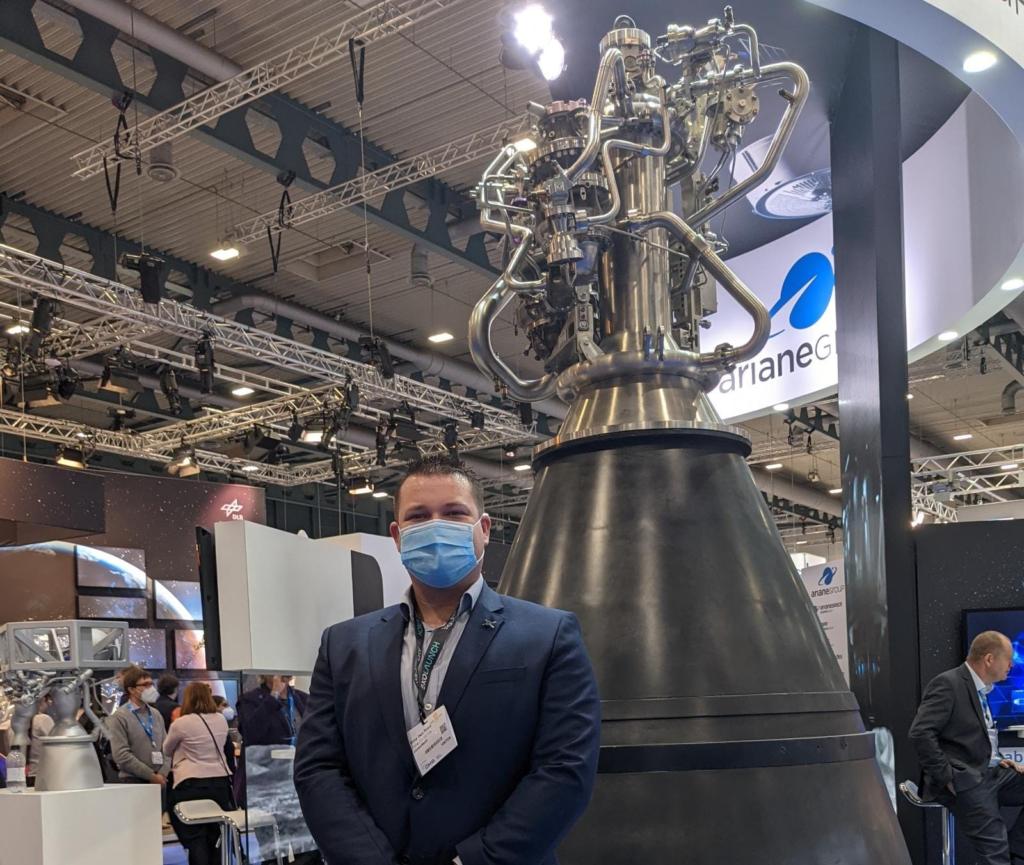
<p>I have said it before and I will say it again: It was a wonderful event with many great companies and people. Everyone is extremely kind and they all take the time to explain what they do and how it will benefit everyone on Earth (and beyond). No, I have no benefit of a lovely rocket engine but it makes a great photo!</p>
<p><img loading="lazy" decoding="async" class=" wp-image-12953 aligncenter" src="https://spacespecialists.com/wp-content/uploads/2021/11/arno-bremen-1024x865.png" alt="" width="408" height="345" srcset="https://spacespecialists.com/wp-content/uploads/2021/11/arno-bremen-1024x865.png 1024w, https://spacespecialists.com/wp-content/uploads/2021/11/arno-bremen-300x254.png 300w, https://spacespecialists.com/wp-content/uploads/2021/11/arno-bremen-768x649.png 768w, https://spacespecialists.com/wp-content/uploads/2021/11/arno-bremen-1536x1298.png 1536w, https://spacespecialists.com/wp-content/uploads/2021/11/arno-bremen.png 1600w" sizes="(max-width: 408px) 100vw, 408px" /></p>
<p>&nbsp;</p>
<p><img loading="lazy" decoding="async" class=" wp-image-12952 aligncenter" src="https://spacespecialists.com/wp-content/uploads/2021/11/arno-pic-circle.png" alt="" width="291" height="291" srcset="https://spacespecialists.com/wp-content/uploads/2021/11/arno-pic-circle.png 389w, https://spacespecialists.com/wp-content/uploads/2021/11/arno-pic-circle-300x300.png 300w, https://spacespecialists.com/wp-content/uploads/2021/11/arno-pic-circle-150x150.png 150w, https://spacespecialists.com/wp-content/uploads/2021/11/arno-pic-circle-260x260.png 260w" sizes="(max-width: 291px) 100vw, 291px" /></p>
<p><strong>About the author:</strong> Arno den Toom is passionate about space biology with an extensive background in gravity simulation, quality management, and life sciences.</p>
<p>Expertise and intelligence with strong ability for conceptual thinking, not limited to the task and always prepared to support and educate others.</p>
<p>Through cross-disciplinary role his experience is with; quality assurance, technology development, business intelligence, planning, project management, and various process controls &amp; optimisation.</p>
]]></content>
		
					<link rel="replies" type="text/html" href="https://spacespecialists.com/site-blog/a-day-at-the-european-space-exposition-23-11-2021/#comments" thr:count="0" />
			<link rel="replies" type="application/atom+xml" href="https://spacespecialists.com/site-blog/a-day-at-the-european-space-exposition-23-11-2021/feed/atom/" thr:count="0" />
			<thr:total>0</thr:total>
			</entry>
		<entry>
		<author>
			<name>SpaceSpecialists</name>
					</author>

		<title type="html"><![CDATA[Discover SPACEtalks &#8211; 19/10/2021 London, UK]]></title>
		<link rel="alternate" type="text/html" href="https://spacespecialists.com/site-blog/discover-spacetalks-19-october-2021-london-uk/" />

		<id>https://spacespecialists.com/?p=12814</id>
		<updated>2021-10-18T09:08:34Z</updated>
		<published>2021-10-18T08:30:09Z</published>
		<category scheme="https://spacespecialists.com" term="Events" /><category scheme="https://spacespecialists.com" term="News" /><category scheme="https://spacespecialists.com" term="robotics" /><category scheme="https://spacespecialists.com" term="Satellites" />
		<summary type="html"><![CDATA[Discover SPACEtalks - 19 October 2021 London, UK Hybrid Event both in-person and Online - Register now! https://www.bigmarker.com/Cosmonauts-ltd/SPACEtalks SPACEtalks https://www.spacetalks.biz/ Ray Stott our International Liaison Manager is a Keynote Speaker at the Discover Space Talks on the 19th October 2021 in London, UK Conference giving a presentation 10.05 - 10.20 Ray Stott - Personal Insights into Space Robotics &#38; Space&#160;<a href="https://spacespecialists.com/site-blog/discover-spacetalks-19-october-2021-london-uk/" class="read-more">Continue Reading</a>]]></summary>

					<content type="html" xml:base="https://spacespecialists.com/site-blog/discover-spacetalks-19-october-2021-london-uk/"><![CDATA[<p style="text-align: center;"><strong>Discover SPACEtalks - 19 October 2021 London, UK</strong></p>
<p style="text-align: center;"><strong>Hybrid Event both in-person and Online - Register now!</strong></p>
<p style="text-align: center;"><strong><a href="https://www.bigmarker.com/Cosmonauts-ltd/SPACEtalks">https://www.bigmarker.com/Cosmonauts-ltd/SPACEtalks</a></strong></p>
<p style="text-align: center;"><strong><a href="http://w1.msonw.net/prod/253c7c00-5a1f-4edb-b4b4-8d1cb8d4f341/0a350e82-2d9b-4031-b082-65def99e14e6">SPACEtalks</a></strong></p>
<p style="text-align: center;"><strong><a href="https://www.spacetalks.biz/">https://www.spacetalks.biz/</a></strong></p>
<p><img loading="lazy" decoding="async" class="size-full wp-image-12818 aligncenter" src="https://spacespecialists.com/wp-content/uploads/2021/10/1634063685399-1.jpeg" alt="" width="508" height="282" srcset="https://spacespecialists.com/wp-content/uploads/2021/10/1634063685399-1.jpeg 508w, https://spacespecialists.com/wp-content/uploads/2021/10/1634063685399-1-300x167.jpeg 300w" sizes="(max-width: 508px) 100vw, 508px" /></p>
<p>Ray Stott our International Liaison Manager is a <strong>Keynote Speaker</strong> at the <strong>Discover Space Talks on the 19th October 2021 in London, UK Conference </strong>giving a presentation</p>
<p><img loading="lazy" decoding="async" class="wp-image-8825 aligncenter" src="https://spacespecialists.com/wp-content/uploads/2020/12/ray-daresbury-photo.jpg" alt="" width="258" height="259" srcset="https://spacespecialists.com/wp-content/uploads/2020/12/ray-daresbury-photo.jpg 748w, https://spacespecialists.com/wp-content/uploads/2020/12/ray-daresbury-photo-300x300.jpg 300w, https://spacespecialists.com/wp-content/uploads/2020/12/ray-daresbury-photo-150x150.jpg 150w, https://spacespecialists.com/wp-content/uploads/2020/12/ray-daresbury-photo-260x260.jpg 260w" sizes="(max-width: 258px) 100vw, 258px" /></p>
<ul>
<li><strong>10.05 - 10.20 </strong></li>
<li><strong>Ray Stott - Personal Insights into Space Robotics &amp; Space Exploration</strong></li>
</ul>
<p>He is also chairing a Discussion Panel in the afternoon</p>
<ul>
<li><strong>15.35 - 16.25 </strong></li>
<li><strong>Space 4.0 Accelerating R&amp;D and Manufacturing</strong></li>
</ul>
<p><strong>We are exhibiting at the venue and you can visit our stand and talk to SpaceSpecialists colleagues.</strong></p>
<p>Come along to <strong>SPACEtalks!</strong> Register here to participate online!</p>
<p style="text-align: center;"><strong><a href="https://www.bigmarker.com/Cosmonauts-ltd/SPACEtalks">https://www.bigmarker.com/Cosmonauts-ltd/SPACEtalks</a></strong></p>
<p style="text-align: center;"><strong><a href="http://w1.msonw.net/prod/253c7c00-5a1f-4edb-b4b4-8d1cb8d4f341/0a350e82-2d9b-4031-b082-65def99e14e6">SPACEtalks</a></strong></p>
<p style="text-align: center;"><strong><a href="https://www.spacetalks.biz/">https://www.spacetalks.biz/</a></strong></p>
<p><img loading="lazy" decoding="async" class="wp-image-12816 aligncenter" src="https://spacespecialists.com/wp-content/uploads/2021/10/space-talks.jpg" alt="" width="867" height="268" srcset="https://spacespecialists.com/wp-content/uploads/2021/10/space-talks.jpg 550w, https://spacespecialists.com/wp-content/uploads/2021/10/space-talks-300x93.jpg 300w" sizes="(max-width: 867px) 100vw, 867px" /></p>
<p>Bringing together the brightest minds in the industry from aerospace experts to government advisors, <strong>SPACEtalks 2.0</strong> will be host to discussions regarding the industry and how the future landscape looks.</p>
<p>This one-of-a-kind commercially focused, aerospace conference is designed for all those within the aerospace and space industry and is hosting an in-person event with many networking opportunities as well as a virtual platform to reach a wider global audience.</p>
<p><strong><u>Speakers</u></strong></p>
<p style="text-align: center;"><strong><a href="https://www.spacetalks.biz/speakers">https://www.spacetalks.biz/speakers</a></strong></p>
<p><img loading="lazy" decoding="async" class="size-full wp-image-12819 aligncenter" src="https://spacespecialists.com/wp-content/uploads/2021/10/1.png" alt="" width="522" height="540" srcset="https://spacespecialists.com/wp-content/uploads/2021/10/1.png 522w, https://spacespecialists.com/wp-content/uploads/2021/10/1-290x300.png 290w" sizes="(max-width: 522px) 100vw, 522px" /></p>
<p><img loading="lazy" decoding="async" class="size-full wp-image-12820 aligncenter" src="https://spacespecialists.com/wp-content/uploads/2021/10/2.png" alt="" width="519" height="552" srcset="https://spacespecialists.com/wp-content/uploads/2021/10/2.png 519w, https://spacespecialists.com/wp-content/uploads/2021/10/2-282x300.png 282w" sizes="(max-width: 519px) 100vw, 519px" /></p>
<p><img loading="lazy" decoding="async" class="size-full wp-image-12821 aligncenter" src="https://spacespecialists.com/wp-content/uploads/2021/10/3.png" alt="" width="513" height="560" srcset="https://spacespecialists.com/wp-content/uploads/2021/10/3.png 513w, https://spacespecialists.com/wp-content/uploads/2021/10/3-275x300.png 275w" sizes="(max-width: 513px) 100vw, 513px" /></p>
<p><strong><u>Agenda</u></strong></p>
<p style="text-align: center;"><strong><a href="https://www.spacetalks.biz/about-us">https://www.spacetalks.biz/about-us</a></strong></p>
<ul id="js-covering-list" class="template-2-section-2-agenda template-edit-area">
<li>09:00 - 09:05 - Opening remarks by Chairman</li>
<li>09:05 - 09:20 - Industry Keynote</li>
<li>09:20 - 10:05 - Panel: United, We Reach For The Stars</li>
<li>10:05 - 10:20 - Stand Alone Presentation: Ray Stott – Personal Insights into Space Robotics &amp; Space Exploration</li>
<li>10:20- 11:10 - Networking Break</li>
<li>11:10 - 11:50 - Panel: Taking Cautious Risks</li>
<li>11:50 - 12:05 - Stand Alone Presentation: Waves of Space Commercialization Andrew Aldrin Associate Professor at Florida Tech &amp; Director at Aldrin Space Institute</li>
<li>12:05 - 12:20 - Stand Alone Presentation: Aerospace R&amp;D Presentation by Granter</li>
<li>12:20 - 13:20 Space Lunch</li>
<li>13:20 - 13:55 - Panel: Holistic Space</li>
<li>13:55 - 14:55 - Panel: Not Just For Fanboys</li>
<li>14:55 - 15:35 - Networking Break</li>
<li>15:35 - 16:25 - Panel: Driving Space 4.0:</li>
<li>16:25 - 17:05 - Fireside Chat</li>
<li>17:05 - 17:10 - Closing Remarks</li>
</ul>
<p><strong><u>About</u></strong></p>
<p style="text-align: center;"><strong><a href="https://www.spacetalks.biz/about-us">https://www.spacetalks.biz/about-us</a></strong></p>
<p><img loading="lazy" decoding="async" class="size-large wp-image-12824 aligncenter" src="https://spacespecialists.com/wp-content/uploads/2021/10/about-pic-1024x388.png" alt="" width="604" height="229" srcset="https://spacespecialists.com/wp-content/uploads/2021/10/about-pic-1024x388.png 1024w, https://spacespecialists.com/wp-content/uploads/2021/10/about-pic-300x114.png 300w, https://spacespecialists.com/wp-content/uploads/2021/10/about-pic-768x291.png 768w, https://spacespecialists.com/wp-content/uploads/2021/10/about-pic.png 1140w" sizes="(max-width: 604px) 100vw, 604px" /></p>
<p><strong>Tuesday 19th October 2021</strong></p>
<p>It's been a long time since everyone has been able to attend in-person events, and this is one of the first opportunities for the space sector to come back in the room together and network and I personally cannot wait!</p>
<p><strong>Venue</strong><br />
SPACEtalks will be hosted on Tuesday <strong>19th October 2021 at</strong> Studio Spaces, E1W 2BB, London, UK.</p>
<p>The nearest train station is either Shadwell (Overground) or Tower Hill (District Line) and is just a short walk from both stations.</p>
<p><img loading="lazy" decoding="async" class="size-full wp-image-12822 aligncenter" src="https://spacespecialists.com/wp-content/uploads/2021/10/rocket.png" alt="" width="910" height="523" srcset="https://spacespecialists.com/wp-content/uploads/2021/10/rocket.png 910w, https://spacespecialists.com/wp-content/uploads/2021/10/rocket-300x172.png 300w, https://spacespecialists.com/wp-content/uploads/2021/10/rocket-768x441.png 768w" sizes="(max-width: 910px) 100vw, 910px" /></p>
<p><strong>Blog written by Ray Stott, International Liaison Manager, SpaceSpecialists Ltd.</strong></p>
]]></content>
		
					<link rel="replies" type="text/html" href="https://spacespecialists.com/site-blog/discover-spacetalks-19-october-2021-london-uk/#comments" thr:count="0" />
			<link rel="replies" type="application/atom+xml" href="https://spacespecialists.com/site-blog/discover-spacetalks-19-october-2021-london-uk/feed/atom/" thr:count="0" />
			<thr:total>0</thr:total>
			</entry>
		<entry>
		<author>
			<name>SpaceSpecialists</name>
					</author>

		<title type="html"><![CDATA[Interview with Sam Juson &#8211; Pathway to Space]]></title>
		<link rel="alternate" type="text/html" href="https://spacespecialists.com/uncategorized/sam-juson-pathway-to-space/" />

		<id>https://spacespecialists.com/?p=9565</id>
		<updated>2024-01-17T00:47:24Z</updated>
		<published>2021-01-14T23:55:03Z</published>
		<category scheme="https://spacespecialists.com" term="Uncategorized" />
		<summary type="html"><![CDATA[Interview with Sam Juson - Pathway to Space on SpaceMates Online 12th January 2021 &#160; Where did it all start? How did you become interested in the space sector? I would say that my interest in aerospace really came from my interest in aircraft and helicopters from an early age. I remember I did my high school work experience shadowing&#160;<a href="https://spacespecialists.com/uncategorized/sam-juson-pathway-to-space/" class="read-more">Continue Reading</a>]]></summary>

					<content type="html" xml:base="https://spacespecialists.com/uncategorized/sam-juson-pathway-to-space/"><![CDATA[<h2 style="text-align: center;"><strong>Interview with Sam Juson - Pathway to Space on SpaceMates Online 12th January 2021</strong></h2>
<p>&nbsp;</p>
<p><strong>Where did it all start? How did you become interested in the space sector?</strong></p>
<p>I would say that my interest in aerospace really came from my interest in aircraft and helicopters from an early age. I remember I did my high school work experience shadowing an RAF helicopter pilot and was lucky enough to get a few flights with him in the Eurocopter Squirrel HT1 from the Defence Helicopter Flying School out of RAF Shawbury back in 2014. From then, I developed a real passion towards flying and really wanted to become a fast jet pilot in the RAF.</p>
<p>Due to this interest, I took up flying lessons from my local airfield when I was 16 and managed to do my first solo flight before the time I got my driving licence! As I was spending so much time at the airfield, I managed to pick up a part time job there where I started off as an Air Traffic Service Assistant in the tower. I continued with this job through college, progressing to an Air Ground Controller after obtaining my Radio Operators Certificate of Competence (ROCC) from the Civil Aviation Authority in 2017 to operate VHF radiotelephony equipment and exchange spoken messages in the aeronautical radio services.</p>
<p>In terms of academics, my strongest subjects when I was younger were maths and physics, which ultimately lead me to study this combination in college as well, as well as psychology, physical education and an Extended Project Qualification (EPQ) looking into lift generation and aerofoil characteristics. This ultimately then led me to study my BEng in Aerospace Engineering with Pilot Studies down in Bristol.</p>
<p><img loading="lazy" decoding="async" class="alignnone size-full wp-image-9566" src="https://spacespecialists.com/wp-content/uploads/2021/01/sam1.png" alt="" width="562" height="249" srcset="https://spacespecialists.com/wp-content/uploads/2021/01/sam1.png 562w, https://spacespecialists.com/wp-content/uploads/2021/01/sam1-300x133.png 300w" sizes="(max-width: 562px) 100vw, 562px" /></p>
<p>&nbsp;</p>
<p>I only really started to specialise in space flight during my final year, choosing to tailor my elective modules towards spacecraft engineering, which gave me valuable experience in simulation exercises on geometric orbit design, mission and spacecraft systems engineering using the Open Cosmos beeApp simulator as well as analysis of radiation dosage on shielding thickness and spacecraft mean body temperature with the STK Space Environment and Effects Tool.</p>
<p>As my personal interests are within space flight and rocket propulsion systems, this led me to do my final year individual project on an exploration of the design of liquid bi-propellent engines, with a practical investigation into the combustion phase using CFD. CFD stands for Computational Fluid Dynamics, and engineers use it to model fluid flow to simulate real life applications. In my case, this was the chemical reaction of various combinations of fuels and oxidisers and see how they effected the performance of the engine, the specific impulse. I then took this on to further, and now studying my MSc in Astronautics and Space Engineering at Cranfield University.</p>
<p>&nbsp;</p>
<p><strong>Being a student, have you managed to find any relevant work experience within the field?</strong></p>
<p>Luckily, I have. It was thanks to Ray Stott from SpaceSpecialists and SpaceMates Online that I managed to be introduced to Joseph Ward who is the CEO and director of propulsion at Smallspark Space Systems. This gave me the chance to build initial contact with him, ask him questions about the companies aims and objectives, as well as the technology they were building. I later applied to one of the SPIN internships that his company was offering, in association with the UK Space Agency, and fortunately the application process went well, and I was accepted onto the programme last Summer for around 3 months.</p>
<p>Smallspark are a UK based Aerospace and Artificial Intelligence research company based in Cardiff, who are developing low cost rocket propulsion systems (https://smallspark.space/). They have also created a software called MooreAI, which allows for the development of high performance, situation specific aerostructures that can be implemented for a variety of applications for aerodynamic optimisation (https://www.mooreai.co.uk/). My main responsibilities were to investigate the effects of various Hybrid Rocket Engine injector designs and develop a method that computationally analysed their performance for optimising the atomisation, combustion properties and mixing of the propellants within OpenFOAM.</p>
<p><img loading="lazy" decoding="async" class="alignnone size-full wp-image-9567" src="https://spacespecialists.com/wp-content/uploads/2021/01/sam2.png" alt="" width="527" height="321" srcset="https://spacespecialists.com/wp-content/uploads/2021/01/sam2.png 527w, https://spacespecialists.com/wp-content/uploads/2021/01/sam2-300x183.png 300w" sizes="(max-width: 527px) 100vw, 527px" /></p>
<p>Also, I managed to secure a part time role during my master’s studies at Asteria: Space and Satellites as an Orbital Engineer. Asteria are a student group at the University of Edinburgh dedicated to the development of Oracle 1; a 3U CubeSat designed for remote sensing of the Earth using hyperspectral imaging which will be pursuing a scientific mission to help track mosquito-borne diseases (http://www.asteria-space.com/). My role an orbital engineer is to basically model the trajectory of the satellite using simulation software like GMAT. I also try and get involved with various other projects within the space sector, for example the work I am doing with 4WardFutures and the Constructing a Life on Mars (CaLoM) project (https://www.calom.space/about).</p>
<p>&nbsp;</p>
<p><strong>What advice would you give student who want to undergraduate students in terms of developing their technical and soft skills?</strong></p>
<p>Building relevant technical skills throughout university and through work experience are essential when entering the aerospace industry. These skills include; programming and coding, computer programming languages such as Python, C++, C and Java are useful for systems engineering and software development, but not essential in certain areas of aerospace. Programmes like MATLAB and Simulink are also a very beneficial tool that would be useful to learn. Having a strong mathematical, analytical, and problem-solving mindset is essential for any engineer, as well as having a creative outlook and being an innovative thinker. Having specific attention to detail and a strong awareness of safety and environmental issues is also crucial within the design process, especially regarding future considerations with the UK’s 2050 net zero target.</p>
<p>As well as technical skills, employers also want to know that the applicant has developed a wide range of transferable soft skills, such as project and time management. Communication skills, both verbally and written, are very important in the world of work, and these skills can be drastically improved through university whilst report writing and oral presentations. I thoroughly recommend making the most of these opportunities and seek help to improve in any ways that you can, it is the perfect time to practice and perfect these skills! The ability to work under pressure and meet deadlines is also something that is very important to employees.</p>
<p><img loading="lazy" decoding="async" class="alignnone size-full wp-image-9568" src="https://spacespecialists.com/wp-content/uploads/2021/01/sam3.png" alt="" width="438" height="170" srcset="https://spacespecialists.com/wp-content/uploads/2021/01/sam3.png 438w, https://spacespecialists.com/wp-content/uploads/2021/01/sam3-300x116.png 300w" sizes="(max-width: 438px) 100vw, 438px" /></p>
<p>One major benefit from doing an Aerospace degree is the affiliation with certain engineering organisations such as the Royal Aeronautical Society with student memberships. These offer vast opportunities for networking with professionals in senior positions within the aerospace sector, attending external webinars and conferences to broaden aerospace knowledge, and a chance to connect with certain mentors who can provide advice and guidance on all engineering aspects. They can help with careers advice, give tips on interview preparation and opportunities that you can get involved with, and provide professional development in terms of becoming Chartered. It also shows that you have a commitment to keeping up to date technical developments and have a good interest in new advancements within the industry, so make the most of these opportunities!</p>
<p><img loading="lazy" decoding="async" class="alignnone size-full wp-image-9569" src="https://spacespecialists.com/wp-content/uploads/2021/01/sam4.jpg" alt="" width="1000" height="321" srcset="https://spacespecialists.com/wp-content/uploads/2021/01/sam4.jpg 1000w, https://spacespecialists.com/wp-content/uploads/2021/01/sam4-300x96.jpg 300w, https://spacespecialists.com/wp-content/uploads/2021/01/sam4-768x247.jpg 768w" sizes="(max-width: 1000px) 100vw, 1000px" /></p>
<p>&nbsp;</p>
<p><strong>Could you give a brief overview of what CranSEDS is, and the projects you are involved in?</strong></p>
<p>If you didn’t think I was busy enough, I am also Co-President at CranSEDS! CranSEDS is Cranfield Universities society for space exploration and development and is a local chapter of UK SEDS. We are made up of around 100 enthusiastic students from a range of technical backgrounds, from Aerospace Vehicle Design, Thermal Power, Robotics, all with the primary focus of developing space technologies.</p>
<p>Currently we currently have teams who are entered into 2 rocketry competitions, the UK National Rocketry Championship where we are required to design and build a rocket to reach the highest apogee possible using any 29mm Cessaroni 2-grain motor with a required payload. We are also entering the international European Rocketry Competition (EuRoC), where our mission is to launch a rocket carrying a 4kg payload at a precise altitude of 10,000 ft above Portugal before getting safely recovered with a series of parachutes. We also have teams who are competing in the Olympus Rover Trials, where we need to design, construct and operate a rover for a habitat construction mission on Mars to a set of real space mission requirements. Finally, we have entered the UKSEDS Satellite Design Competition, where again we must design, construct and operate a 3U CubeSat payload system with the objective to acquire as much information from an analogue lunar nanosatellite mission. We also have a research division who are looking at improving Cranfield’s current Hybrid Rocket Engine and build a suitable test stand to lay the foundations to create a competitive rocketry team at an international level.</p>
<p><img loading="lazy" decoding="async" class="alignnone size-full wp-image-9124" src="https://spacespecialists.com/wp-content/uploads/2020/12/cranpic5.png" alt="" width="602" height="186" srcset="https://spacespecialists.com/wp-content/uploads/2020/12/cranpic5.png 602w, https://spacespecialists.com/wp-content/uploads/2020/12/cranpic5-300x93.png 300w" sizes="(max-width: 602px) 100vw, 602px" /></p>
<p>As well as competitions, we are also planning some sort of STEM outreach and engagement programme to deliver virtually to the local children in the schools of the Bedfordshire area. This will probably involve some sort of interactive rocket building workshop supported by some theoretical sessions to actively encourage children’s involvement in STEM activities. We are also planning to organise and deliver 'The Space of Tomorrow: From Vostok to Artemis' UK Space Day conference where we will get a diverse panel of experts to give talks about their experiences within the space industry, and how they think this has shaped the future of space technology and exploration.</p>
<p><img loading="lazy" decoding="async" class="alignnone size-full wp-image-9125 aligncenter" src="https://spacespecialists.com/wp-content/uploads/2020/12/cranpic6.png" alt="" width="300" height="98" /></p>
<p>&nbsp;</p>
<p><strong>Cranfield’s Astronautics and Space Engineering MSc</strong></p>
<p>Personally, I have found that the Astronautics and Space Engineering has given me all the relevant opportunities to study the things I have been passionate about for the last few years. It was the perfect course that allowed me to really investigate the specific topics I was interested in and specialise within this field. Cranfield itself is very prestigious when it comes to research output, in particularly related to the aerospace sector. This, as well as world class facilities and its own airfield! I think the core modules of the course provide the fundamental understanding for any aspiring space engineer, and the vast choice of electives allow you to specialise in any area you are interested in.</p>
<p>Personally, I enrolled in the Mathematics and Programming for Trajectory Design and Spacecraft Dynamics and Control modules, but there really are many possibilities to explore. Also, the standard that the taught modules are delivered is very refreshing, and every academic staff really is an expert in their field. Their support, guidance and perseverance throughout the Covid pandemic has been inspirational! It provides students with the necessary challenge and experience so that they are ready to enter the space industry and continue working on the future technical developments of space engineering.</p>
<p><img loading="lazy" decoding="async" class="alignnone size-full wp-image-9122" src="https://spacespecialists.com/wp-content/uploads/2020/12/cranpic3.png" alt="" width="601" height="300" srcset="https://spacespecialists.com/wp-content/uploads/2020/12/cranpic3.png 601w, https://spacespecialists.com/wp-content/uploads/2020/12/cranpic3-300x150.png 300w, https://spacespecialists.com/wp-content/uploads/2020/12/cranpic3-100x50.png 100w" sizes="(max-width: 601px) 100vw, 601px" /></p>
<p>Due to my academic modules and work experience, my main interests now are rocket propulsion and mission analysis. I am currently doing a Group Design Project where we are designing a Debris Scavenger Spacecraft that will be implemented in the GEO region to help mitigate the increase in space debris. I am on the mission analysis team for that, and it’s great that I can take what I have learned from my part time work at Asteria and apply it to my university work and vis versa. This is also the case in my space propulsion module, where I learned a lot of the fundamental principles of hybrid engines and the theory behind different systems of rocket which has really helped me out during my MSc.</p>
<p><img loading="lazy" decoding="async" class="alignnone size-full wp-image-9570" src="https://spacespecialists.com/wp-content/uploads/2021/01/Psam5.png" alt="" width="602" height="208" srcset="https://spacespecialists.com/wp-content/uploads/2021/01/Psam5.png 602w, https://spacespecialists.com/wp-content/uploads/2021/01/Psam5-300x104.png 300w" sizes="(max-width: 602px) 100vw, 602px" /></p>
<p>&nbsp;</p>
<p><strong>What are your personal future career goals and aspirations?</strong></p>
<p>Personally, I just want space to be a part of my daily routine. Hopefully I am lucky enough to be able to find a job where I can put the skills I have learnt and developed throughout university into practise and help work towards the future of space flight. A personal goal of mine would be working for an organisation such as ESA, I think that would be the pinnacle of my space journey! But for the mean time, I think I will just have to be patient, and continue to work on the opportunities that I am involved with now.</p>
<p><img loading="lazy" decoding="async" class="alignnone size-large wp-image-9571" src="https://spacespecialists.com/wp-content/uploads/2021/01/sam7-1024x324.png" alt="" width="604" height="191" srcset="https://spacespecialists.com/wp-content/uploads/2021/01/sam7-1024x324.png 1024w, https://spacespecialists.com/wp-content/uploads/2021/01/sam7-300x95.png 300w, https://spacespecialists.com/wp-content/uploads/2021/01/sam7-768x243.png 768w, https://spacespecialists.com/wp-content/uploads/2021/01/sam7.png 1231w" sizes="(max-width: 604px) 100vw, 604px" /></p>
<p>&nbsp;</p>
<p><strong>Testimonial</strong></p>
<p>I wanted to take the time to thank Ray Stott for all the support and guidance he has given to me over the last few months. He truly does live by the philosophy of giving back, and using his experiences to help and better others, which SpaceSpecialists integrate into their daily work.</p>
<p>The network connections he has enabled me with has opened so many exciting opportunities for me to establish myself within the space sector. From helping me secure my first industrial internship, providing guest talks to CranSEDS, offering his services to improve my CV and professional online profile, promoting me on his company website, connecting me to likeminded space professionals, to just general great life advice.</p>
<p>I wish there was a way I could repay him for the great things he has done for me, but the least I can do is spread the word of how much I would recommend Ray Stott, SpaceMates Online and all the services SpaceSpecialists offer!</p>
<p>&nbsp;</p>
<p><strong>Comments and feedback</strong></p>
<p><img loading="lazy" decoding="async" class="alignnone size-large wp-image-9573" src="https://spacespecialists.com/wp-content/uploads/2021/01/sam90.png" alt="" width="604" height="277" srcset="https://spacespecialists.com/wp-content/uploads/2021/01/sam90.png 608w, https://spacespecialists.com/wp-content/uploads/2021/01/sam90-300x138.png 300w" sizes="(max-width: 604px) 100vw, 604px" /></p>
<p><img loading="lazy" decoding="async" class="alignnone wp-image-9572" src="https://spacespecialists.com/wp-content/uploads/2021/01/sam9.png" alt="" width="603" height="203" srcset="https://spacespecialists.com/wp-content/uploads/2021/01/sam9.png 624w, https://spacespecialists.com/wp-content/uploads/2021/01/sam9-300x101.png 300w" sizes="(max-width: 603px) 100vw, 603px" /></p>
<p>I personally wanted to thank everyone who attended the talk, and took an interest in my journey and early career. Here are just a few of the comments that left a smile on my face for the rest of the day:</p>
<p><strong>Louise Johnson</strong> – Executive Coach and Business Consultant: ‘Your story is so interesting Sam, your determination is inspirational - well done and all the best for your future in the space sector.’</p>
<p><strong>Louise Pode</strong> – Director and Aerospace Coach for ProAbility Ltd: ‘What a great journey Sam - thank you for sharing. So interesting to hear how you transmitted from aviation to space. I love your passion - good luck!’</p>
<p><strong>Amir Kerimi</strong> – Aircraft Propulsion Engineer: ‘Thank you for the great presentation Sam! Really inspirational!’</p>
<p><strong>Arno Den Toom</strong> – Astrobiologist: ‘Thank you Sam, fantastic start in your career <img src="https://s.w.org/images/core/emoji/17.0.2/72x72/1f642.png" alt="🙂" class="wp-smiley" style="height: 1em; max-height: 1em;" /> Great to see such passion!’</p>
]]></content>
		
					<link rel="replies" type="text/html" href="https://spacespecialists.com/uncategorized/sam-juson-pathway-to-space/#comments" thr:count="0" />
			<link rel="replies" type="application/atom+xml" href="https://spacespecialists.com/uncategorized/sam-juson-pathway-to-space/feed/atom/" thr:count="0" />
			<thr:total>0</thr:total>
			</entry>
		<entry>
		<author>
			<name>SpaceSpecialists</name>
					</author>

		<title type="html"><![CDATA[Space Exploration Problems We Have Yet To Solve]]></title>
		<link rel="alternate" type="text/html" href="https://spacespecialists.com/fun-stories/space-exploration-problems/" />

		<id>https://spacespecialists.com/?p=9508</id>
		<updated>2024-01-17T00:49:00Z</updated>
		<published>2020-12-30T15:01:47Z</published>
		<category scheme="https://spacespecialists.com" term="Fun Stories" />
		<summary type="html"><![CDATA[Top 10 Long-Term Space Exploration Problems We Have Yet To Solve &#160; Everyone is excited about the possibility of a crewed mission to Mars. There is even speculation that the first humans will land on Mars in the 2030s. Well! That could be true. But it is actually harder than it looks. A crewed mission to Mars could remain a&#160;<a href="https://spacespecialists.com/fun-stories/space-exploration-problems/" class="read-more">Continue Reading</a>]]></summary>

					<content type="html" xml:base="https://spacespecialists.com/fun-stories/space-exploration-problems/"><![CDATA[<h2><strong>Top 10 Long-Term Space Exploration Problems We Have Yet To Solve</strong></h2>
<p>&nbsp;</p>
<p>Everyone is excited about the possibility of a crewed mission to Mars. There is even speculation that the first humans will land on Mars in the 2030s. Well! That could be true. But it is actually harder than it looks. A crewed mission to Mars could remain a pipe dream considering current technology and political trends, especially in the United States.</p>
<p>There are also several problems over which we have no control. This often involves our bodies and the conditions on Mars itself. It seems like Mars is out to kill the first humans who set foot on it—an opinion shared by several people including Elon Musk, who may revolutionise space travel. Nevertheless, we will keep our fingers crossed.</p>
<p>&nbsp;</p>
<h2>10. MONEY</h2>
<p><img loading="lazy" decoding="async" class="alignnone size-full wp-image-9509" src="https://spacespecialists.com/wp-content/uploads/2020/12/money.jpg" alt="" width="632" height="332" srcset="https://spacespecialists.com/wp-content/uploads/2020/12/money.jpg 632w, https://spacespecialists.com/wp-content/uploads/2020/12/money-300x158.jpg 300w" sizes="(max-width: 632px) 100vw, 632px" /><br />
<em>Photo credit: futurism.com</em></p>
<p>NASA cannot afford a crewed mission to Mars. This was revealed in July 2017 when William Gerstenmaier, NASA’s chief of human spaceflight, revealed that the agency does not receive enough funding from the US government to make NASA’s first Mars landing scheduled for the 2030s realistic.</p>
<p>NASA, private space agencies, and non-profits give vastly different figures when estimating the cost of a crewed mission to Mars. This ranges from $1 trillion spread over 25 years (as proposed by the non-profit Mars Institute) to $100 billion spread over 30–40 years (as proposed by NASA). However, NASA cannot afford their estimate.</p>
<p>NASA received $19.5 billion in funding for the 2017 fiscal year. That amount seems like a lot until we realise that the agency splits this money between several space missions, programs, and research. Considering current trends, NASA’s funding drought is unlikely to end anytime soon. Its budget has only grown by a measly 2 percent a year within the past few years.</p>
<p>&nbsp;</p>
<h2>9. LONELINESS</h2>
<p><img loading="lazy" decoding="async" class="alignnone size-full wp-image-9510" src="https://spacespecialists.com/wp-content/uploads/2020/12/lonly.jpg" alt="" width="632" height="402" srcset="https://spacespecialists.com/wp-content/uploads/2020/12/lonly.jpg 632w, https://spacespecialists.com/wp-content/uploads/2020/12/lonly-300x191.jpg 300w" sizes="(max-width: 632px) 100vw, 632px" /><br />
<em>Photo credit: National Geographic</em></p>
<p>Humans are social creatures and often require interaction. Researchers fear this could become a problem during an expedition to Mars. A few years ago, researchers had a group of people live in an isolated habitat in the Arizona desert for a considerable period of time.</p>
<p>They noted that some participants soon suffered from depression and mood swings. Some also became hostile and mostly did not talk to each other for 18 months. Their few interactions were limited to brief conversations about running the facility. Although the team later had psychologists to help them, astronauts on Mars will not have the same privilege.</p>
<p>The results of this test have made some researchers question future plans to send just two astronauts to Mars in a single spacecraft. The astronauts will probably become bored, depressed, and could even start to dislike each other, which could lead to their doom. However, some researchers think this is unlikely to happen if the two astronauts have compatible personalities.</p>
<p>&nbsp;</p>
<h2>8. THE DUST STORMS</h2>
<p><img loading="lazy" decoding="async" class="alignnone size-full wp-image-9511" src="https://spacespecialists.com/wp-content/uploads/2020/12/marsdust.jpg" alt="" width="632" height="391" srcset="https://spacespecialists.com/wp-content/uploads/2020/12/marsdust.jpg 632w, https://spacespecialists.com/wp-content/uploads/2020/12/marsdust-300x186.jpg 300w" sizes="(max-width: 632px) 100vw, 632px" /><br />
<em>Photo credit: NASA</em></p>
<p>In January 2004, the NASA space rover Opportunity landed on Mars for a 90-day mission (in Mars days) to find evidence of water on the Red Planet. Opportunity completed its assignment almost immediately and went on to complete more missions over 15 years. Its surprising survival streak ended in June 2018 when it lost contact with NASA during a dust storm.</p>
<p>Opportunity often hibernated at night because it ran on solar power.  However, it probably switched to its backup battery after the dust from the storm covered its solar panels. Opportunity ran on its batteries until it died. NASA fears a repeat incident could happen with the solar-powered stations used by astronauts on Mars.</p>
<p>Mars experiences two types of dust storms. The first and commonest are the regular storms that could cover large swathes of land as wide as a whole continent on Earth. Thankfully, these storms are light and only last for a few weeks. The other type—like the one that killed Opportunity—is the rarer but stronger “global dust storm” that covers the entire planet.</p>
<p>Global dust storms occur every 5.5 Earth years (three Mars years) and could last for months. Besides covering the solar panels, they could also block sunlight from reaching Mars, which could put the stations and astronauts in jeopardy. Thankfully, Mars dust storms are unlikely to cause serious physical damage to the stations. They are more of a breeze than a storm despite the name.</p>
<p>&nbsp;</p>
<h2>7. FOOD</h2>
<p><img loading="lazy" decoding="async" class="alignnone size-full wp-image-9512" src="https://spacespecialists.com/wp-content/uploads/2020/12/foodrover.jpg" alt="" width="632" height="409" srcset="https://spacespecialists.com/wp-content/uploads/2020/12/foodrover.jpg 632w, https://spacespecialists.com/wp-content/uploads/2020/12/foodrover-300x194.jpg 300w" sizes="(max-width: 632px) 100vw, 632px" /><br />
<em>Photo credit: upi.com </em></p>
<p>A study by PhD students at the Massachusetts Institute of Technology (MIT) revealed that a human colony on Mars could die of starvation. The group based their study on the crewed mission planned by Mars One.</p>
<p>The organization wants to set up a human colony of 25–40 individuals on Mars by 2025. Food will be provided by crops grown inside the habitat of the colonists. An MIT study to simulate that habitat has revealed that the astronauts will need to choose between getting enough food or oxygen.</p>
<p>The food and oxygen levels in the habitat are linked because plants produce oxygen as a by-product. On Mars, that oxygen will be used to sustain the lives of the astronauts. The MIT study revealed that the plants will produce excessive oxygen if they produce enough food to feed everyone in the habitat.</p>
<p>This will clearly be detrimental to the lives of the astronauts because breathing excessive amounts of oxygen could kill them. However, the oxygen levels would be balanced if the plants produce lesser amounts of food, which would not be enough to feed everyone. The researchers say that this problem could be solved by developing an “oxygen removal system,” which does not exist for now.</p>
<p>&nbsp;</p>
<h2>6. SPACECRAFT</h2>
<p><img loading="lazy" decoding="async" class="alignnone size-full wp-image-9513" src="https://spacespecialists.com/wp-content/uploads/2020/12/spacecraft.jpg" alt="" width="632" height="352" srcset="https://spacespecialists.com/wp-content/uploads/2020/12/spacecraft.jpg 632w, https://spacespecialists.com/wp-content/uploads/2020/12/spacecraft-300x167.jpg 300w" sizes="(max-width: 632px) 100vw, 632px" /><br />
<em>Photo credit: businessinsider.com</em></p>
<p>The race to land the first human on Mars is currently led by NASA, SpaceX, and Blue Origin. In fact, all three organisations already have spacecraft that could take us to Mars. However, their rockets use dangerous fuels and would take too long to get to Mars from a human safety perspective.</p>
<p>NASA is trying to solve this by developing the Space Launch System that uses liquid hydrogen and some other chemicals for fuel. SpaceX is considering altering its spacecraft to use liquid methane for fuel, while Blue Origin is settling for liquid hydrogen. However, some still doubt whether these new spaceships and fuels will get us to Mars.<a href="https://www.businessinsider.com/chris-hadfield-mars-travel-nasa-spacex-blue-origin-2018-6/?IR=T" target="_blank" rel="noopener noreferrer"><sup>[5]</sup></a></p>
<p>One is Chris Hadfield, a former NASA astronaut, who likened traveling to Mars—in even the latest spaceships in development—to crossing an ocean in a canoe. Hadfield believes that the dangers of space and the unpredictability of the spaceships will kill most astronauts long before they land on Mars.</p>
<p>Curiously, this opinion is shared by SpaceX CEO, Elon Musk, who once mentioned that the first crewed Mars mission will probably lead to death.</p>
<p>&nbsp;</p>
<h2>5. SURGERY</h2>
<p><img loading="lazy" decoding="async" class="alignnone size-full wp-image-9514" src="https://spacespecialists.com/wp-content/uploads/2020/12/surgery.jpg" alt="" width="632" height="397" srcset="https://spacespecialists.com/wp-content/uploads/2020/12/surgery.jpg 632w, https://spacespecialists.com/wp-content/uploads/2020/12/surgery-300x188.jpg 300w" sizes="(max-width: 632px) 100vw, 632px" /></p>
<p>As the possibility of long-term crewed space missions to the Moon and even Mars becomes a reality, scientists have started to grapple with the problems posed by performing surgery in space. The unique environment of space means sick astronauts are likelier to die of minor wounds and infections there than on Earth.</p>
<p>Astronauts sent to the International Space Station (ISS) are often trained to perform certain medical procedures like administering injections, stitching wounds, and even extracting a tooth. However, they would need to quickly return to Earth on a spacecraft permanently docked at the ISS if they have more severe medical issues.</p>
<p>This is because the sick bay on the ISS is no better than a first aid kit. Even if the sick bay rose to the same standard as a hospital and had a permanent doctor (which it does not), the lack of gravity would be a real challenge.</p>
<p>Among other problems, blood from the wound or surgical incision could float and obstruct the view of the doctor. Worse, it could contaminate the entire cabin. Also, anaesthesia does not work as well as on Earth, which means lots of pain for the astronaut.</p>
<p>These problems could be worse on long-term space explorations to the Moon and Mars. One suggestion is to use robot surgeons controlled in real time by human doctors on Earth. While this could work on the Moon, it would be impossible on Mars where information takes 20 minutes to reach Earth and vice versa.</p>
<p>&nbsp;</p>
<h2>4. MARS TOXIC DUST</h2>
<p><img loading="lazy" decoding="async" class="alignnone size-full wp-image-9515" src="https://spacespecialists.com/wp-content/uploads/2020/12/toxicdustmars.jpg" alt="" width="632" height="440" srcset="https://spacespecialists.com/wp-content/uploads/2020/12/toxicdustmars.jpg 632w, https://spacespecialists.com/wp-content/uploads/2020/12/toxicdustmars-300x209.jpg 300w" sizes="(max-width: 632px) 100vw, 632px" /><br />
<em>Photo credit: newscientist.com</em></p>
<p>Mars is filled with toxic dust that could hamper a crewed mission to the Red Planet. Mars dust exists as round, fine, electrically charged silicate particles that will stick to astronauts’ suits. The dust will be difficult to remove, raising concerns that it could get into the astronauts’ base and clog crucial instruments and systems including water purifiers and air filters.</p>
<p>This could be deadly because the fine silicate particles could seep into the lungs where it will react with water to form harmful chemicals. The effect of the dust becomes worse when we realise that it contains gypsum and perchlorates. Gypsum is not dangerous on its own, but long-term exposure could cause eye, skin, and lung problems. Perchlorates could cause thyroid gland problems.</p>
<p>&nbsp;</p>
<h2>3. EXPOSURE TO SPACE ELEMENTS</h2>
<p><img loading="lazy" decoding="async" class="alignnone size-full wp-image-9516" src="https://spacespecialists.com/wp-content/uploads/2020/12/exposuretospace.jpg" alt="" width="632" height="423" srcset="https://spacespecialists.com/wp-content/uploads/2020/12/exposuretospace.jpg 632w, https://spacespecialists.com/wp-content/uploads/2020/12/exposuretospace-300x201.jpg 300w" sizes="(max-width: 632px) 100vw, 632px" /><br />
<em>Photo credit: usatoday.com</em></p>
<p>Space is filled with dangerous cosmic rays and irregular solar storms that could cause intense radiation. Scientists predict that astronauts traveling to Mars will be exposed to radiation levels up to 20 percent more than they will ever receive during their lifetimes on Earth. This intense radiation could cause heart, lung, and eye problems as well as neurological disorders and even cancer.</p>
<p>This could be a huge problem because a one-way trip to Mars could last six months. Solar storms are also unpredictable, which makes the situation worse. One solution is to develop a spacecraft that could get astronauts to Mars much faster. However, astronauts are not free from these radiation risks even when they get to Mars.</p>
<p>Although Earth’s atmosphere shields us from dangerous radiation, Mars’s atmosphere does not provide the same protection. Scientists propose to solve this by covering the human habitat on Mars with a thick anti–solar storm material just like the shielding on parts of the ISS. Others propose that humans will be protected from the radiation if they live in the any of Mars’s numerous lava tube caves instead.</p>
<p>&nbsp;</p>
<h2>2. OUR BODIES CANNOT COPE</h2>
<p><img loading="lazy" decoding="async" class="alignnone size-full wp-image-9518" src="https://spacespecialists.com/wp-content/uploads/2020/12/effectonbody.jpg" alt="" width="632" height="408" srcset="https://spacespecialists.com/wp-content/uploads/2020/12/effectonbody.jpg 632w, https://spacespecialists.com/wp-content/uploads/2020/12/effectonbody-300x194.jpg 300w" sizes="(max-width: 632px) 100vw, 632px" /><br />
<em>Photo credit: NASA</em></p>
<p>Human bodies have a hard time adjusting to the zero gravity levels experienced in the nearby ISS. This would become even worse during and after a trip to faraway Mars. Astronauts would have to cope with three different gravitational fields during a voyage to Mars.</p>
<p>Astronauts will experience the first gravitational field here on Earth (before and after the trip). It is the regular one we are used to. The second is the zero gravity that astronauts experience while traveling the distance between Earth and Mars. The third is the gravitational field on Mars, which is one-third the gravity on Earth.</p>
<p>Moving between gravitational fields causes a distortion in our senses of balance and movement. It also affects the coordination between our eyes, head, and hands. The lower gravity levels outside Earth will cause astronauts to lose valuable bone density. This makes their bones susceptible to breakage when they return to Earth.</p>
<p>The lower gravity level outside Earth will also cause body fluids to escape into the head. This could cause a myriad of problems including kidney stones, dehydration, loss of calcium, and eye problems. Drugs would have reduced the effects except that they work differently in space.</p>
<p>&nbsp;</p>
<h2>1. THE RETURN TRIP</h2>
<p><img loading="lazy" decoding="async" class="alignnone size-full wp-image-9519" src="https://spacespecialists.com/wp-content/uploads/2020/12/returntrip.jpg" alt="" width="632" height="352" srcset="https://spacespecialists.com/wp-content/uploads/2020/12/returntrip.jpg 632w, https://spacespecialists.com/wp-content/uploads/2020/12/returntrip-300x167.jpg 300w" sizes="(max-width: 632px) 100vw, 632px" /><br />
<em>Photo credit: National Geographic</em></p>
<p>Using current technology, an expedition to Mars will be a one-way trip because astronauts who travel to Mars will be unable to return to Earth. While NASA is already developing the Mars Ascent Vehicle (MAV) to make a return trip possible, the technology is not without its own problems.</p>
<p>When completed, the MAV will weigh 18 tons and will carry an extra 33 tons of fuel to take off from Mars. This massive weight means that it will be unable to land safely on Mars due to the planet’s thin atmosphere, which could make the MAV burn up in the atmosphere or slam straight into the ground. For comparison, the heaviest thing we have landed on Mars is the Curiosity rover, which weighs just one ton.</p>
<p>NASA intends to solve this by reducing the weight of the MAV and developing an inflatable heat shield that will slow the craft’s speed during its descent to Mars. The MAV will have a minimalist interior and might not even have seats. However, the astronauts will not be standing all the way back to Earth. Instead, they will be transported to the Earth Return Vehicle (ERV), which will orbit Mars and return them to Earth.</p>
<p>The ERV was also created to reduce weight. Instead of making a single spacecraft that will take off from Mars and bring the astronauts back to Earth, NASA will create a two-part system consisting of the MAV and the ERV. The MAV will take off from Mars’s surface and transport the astronauts to the ERV, which will bring them back to Earth.</p>
<p>Scientists will also reduce the weight of the MAV by having it create its fuel from Mars’s atmosphere. The MAV will extract methane (carbon and hydrogen) and oxygen, which it needs to make its fuel, from the underground water and the abundant carbon dioxide (CO<sub>2</sub>) in Mars’s atmosphere.</p>
<p>&nbsp;</p>
<h4><em>This is a wonderful piece written by OLIVER TAYLOR for Listverse.com we thought we would share it with you.</em></h4>
<h4><em>For more articles like this please follow the link here. <a href="http://Listverse.com" target="_blank" rel="noopener">http://Listverse.com</a></em></h4>
]]></content>
		
					<link rel="replies" type="text/html" href="https://spacespecialists.com/fun-stories/space-exploration-problems/#comments" thr:count="0" />
			<link rel="replies" type="application/atom+xml" href="https://spacespecialists.com/fun-stories/space-exploration-problems/feed/atom/" thr:count="0" />
			<thr:total>0</thr:total>
			</entry>
		<entry>
		<author>
			<name>SpaceSpecialists</name>
					</author>

		<title type="html"><![CDATA[Mankind&#8217;s Dream of Flying &#038; Air Traffic Management]]></title>
		<link rel="alternate" type="text/html" href="https://spacespecialists.com/site-blog/mankinds-dream-of-flying-cns-atm/" />

		<id>https://spacespecialists.com/?p=9469</id>
		<updated>2024-01-17T00:51:22Z</updated>
		<published>2020-12-27T18:23:21Z</published>
		<category scheme="https://spacespecialists.com" term="Fun Stories" /><category scheme="https://spacespecialists.com" term="Satellites" />
		<summary type="html"><![CDATA[Mankind's Dream of Flying Man has always wanted to fly. It is believed since he saw the birds flying. Many attempts have been made and in many different ways, but all have failed. From the 17th century until the 20th century much has been done. Imitations of birds attached by a cable, wings for men, similar to those of birds,&#160;<a href="https://spacespecialists.com/site-blog/mankinds-dream-of-flying-cns-atm/" class="read-more">Continue Reading</a>]]></summary>

					<content type="html" xml:base="https://spacespecialists.com/site-blog/mankinds-dream-of-flying-cns-atm/"><![CDATA[<h1><strong>Mankind's Dream of Flying</strong></h1>
<p><img loading="lazy" decoding="async" class="size-full wp-image-9489 aligncenter" src="https://spacespecialists.com/wp-content/uploads/2020/12/j.jpg" alt="" width="567" height="388" srcset="https://spacespecialists.com/wp-content/uploads/2020/12/j.jpg 567w, https://spacespecialists.com/wp-content/uploads/2020/12/j-300x205.jpg 300w" sizes="(max-width: 567px) 100vw, 567px" /></p>
<p>Man has always wanted to fly. It is believed since he saw the birds flying. Many attempts have been made and in many different ways, but all have failed.</p>
<p>From the 17th century until the 20th century much has been done. Imitations of birds attached by a cable, wings for men, similar to those of birds, to be flapped like birds. Balloons that later evolved into airships, gliders and small flying machines that would evolve to be airplanes. Up to the modern planes we have today. In the last decade, the UAV – Unmanned Aerial Vehicle is being developed very fast.</p>
<p>Many old and traditional applications are being substituted by the UAV; the electric power transmission line maintenance is one excellent example. There are many companies using UAVs for routine maintenance and repair of the electric power line transmission with lower cost and less human risk.</p>
<p>It is not my intention to show the History of Aviation here. I bring only a small timeline of Aviation for us to be in tune with some important things we will see in this blog.</p>
<h1><strong>The "Golden Age of Aviation" (1918 - 1939)</strong></h1>
<p>During the years between World War, I and World War II (interwar period), aircraft technology, in general, has developed a lot. In this period, rapid advances were made in the design of airplanes and airlines started to operate. It was also a time when airmen began to impress the world with their achievements and skills.</p>
<p><img loading="lazy" decoding="async" class="wp-image-9490 aligncenter" src="https://spacespecialists.com/wp-content/uploads/2020/12/190415022044.jpg" alt="" width="757" height="570" /></p>
<p>The existing aircraft had their main material, wood, replaced by aluminium. Aircraft engines have been greatly improved, with a noticeable increase in power compared to what engines at the time could generate.</p>
<p>This great series of technological advances, as well as the growing socio-economic impact that airplanes have had worldwide, makes this period the golden age of aviation.</p>
<h1><strong>The Future</strong></h1>
<p>Since the early 1990s, commercial aviation has developed technologies that have made the airplane increasingly automated, thus gradually reducing the importance of the pilot in the operation of the aircraft, with a view to reducing air accidents caused by human error.</p>
<p><img loading="lazy" decoding="async" class="wp-image-9485 aligncenter" src="https://spacespecialists.com/wp-content/uploads/2020/12/h-1.jpg" alt="" width="909" height="540" srcset="https://spacespecialists.com/wp-content/uploads/2020/12/h-1.jpg 677w, https://spacespecialists.com/wp-content/uploads/2020/12/h-1-300x178.jpg 300w" sizes="(max-width: 909px) 100vw, 909px" /></p>
<p>Commercial aircraft manufacturers continue to research ways to improve airplanes, making them increasingly safe, efficient and quiet. At the same time, pilots, airspace controllers and mechanics have become increasingly well-trained, and aircraft are, more each time, being surveyed to avoid accidents caused by human or mechanical failure.</p>
<h1><strong>History: Foundation of the International Civil Aviation Organization (ICAO)</strong></h1>
<p>The consequence of the studies initiated by the US and subsequent consultations between the Major Allies was that the US government extended an invitation to 55 States or authorities to attend, in November 1944, an International Civil Aviation Conference in Chicago.</p>
<p>Fifty-four States attended this Conference, at the end of which a Convention on International Civil Aviation was signed by 32 States, setting up the permanent International Civil Aviation Organization (ICAO) to secure international co-operation and the highest possible degree of uniformity in regulations and standards, procedures and organisation regarding civil aviation matters.</p>
<p>At the same time, the International Services Transit Agreement and the International Air Transport Agreement were signed.</p>
<p>&nbsp;</p>
<p><img loading="lazy" decoding="async" class="wp-image-9492 aligncenter" src="https://spacespecialists.com/wp-content/uploads/2020/12/icao.jpg" alt="" width="853" height="167" srcset="https://spacespecialists.com/wp-content/uploads/2020/12/icao.jpg 613w, https://spacespecialists.com/wp-content/uploads/2020/12/icao-300x59.jpg 300w" sizes="(max-width: 853px) 100vw, 853px" /></p>
<p>&nbsp;</p>
<p>The most important work accomplished by the Chicago Conference was in the technical field because the Conference laid the foundation for a set of rules and regulations regarding air navigation as a whole, which brought safety in flying a great step forward and paved the way for the application of a common air navigation system throughout the world.</p>
<p>Since the beginning of aviation and commercial exploration, the world-class organizations have had one concern in mind: "How to fly safer". Several civil organizations all over the world were created to develop standardization and regulations for safety in aviation.</p>
<p>In addition, several local branches in every country were created to manage the investigations of aviation accidents and incidents. After many years of investigating several accidents, they concluded that an accident is a result of several errors and problems.</p>
<p>Today ICAO has several books, that are periodically revised, to be followed by anyone that wants to work in the Aviation market. Here are the items published by ICAO:</p>
<ul>
<li>Personnel Licensing</li>
<li>Rules of the Air</li>
<li>Meteorological Service</li>
<li>Aeronautical Charts</li>
<li>Units of Measurement to be used in Air and Ground Operations</li>
<li>Operation of Aircraft</li>
<li>Aircraft Nationality and Registration Marks</li>
<li>Airworthiness of Aircraft</li>
<li>Aeronautical Telecommunications</li>
<li>Air Traffic Control Service, Flight Information Service and Alerting Service</li>
<li>Aircraft Accident and Incident Investigation</li>
<li>Aerodromes Design and Operations</li>
<li>Aeronautical Information Services</li>
<li>Security</li>
<li>The Safe Transport of Dangerous Good by Air</li>
</ul>
<p>If a new subject is created, ICAO will include wisely to the pertinent item or create a new one if necessary.</p>
<p>The CNS-ATM (Communication, Navigation, Surveillance, Air Traffic Management) has published the Book 9750_2ed_en containing the Global Air Navigation Plan for CNS/ATM Systems.</p>
<h1><strong>CNS-ATM</strong></h1>
<p>In the early 1980s, ICAO was monitoring the growth in the number of flights. In 1983 a special committee was created for Future Air Navigation Systems - FANS. Over the years this committee has established a modus operandi called CNS-ATM Communication Navigation Surveillance - Air Traffic Management.</p>
<p>The implementation of the CNS-ATM would be long, too long. As new standards were written, new systems were being developed and certified to be operational.</p>
<p>In addition to the growth of numbers of flights, there was the need of making the flights safer and with fewer risks, concerning the separation of the aircraft. So began the studies to make it possible with the CNS-ATM implementation.</p>
<p>During this blog, we will understand better and with certainty, it would be necessary to change the old ways of communication, navigation, surveillance and ATM to achieve this target. These are the basic requirements to increase the number of flights, reduce aircraft separation and have fewer risks and safer operations. Other reasons I will mention later when I explain about CNS-ATM.</p>
<p>The next figure will give us an idea of the several phases of a flight. I will show another figure, on the CNS-ATM part, to give us an idea of the future system.</p>
<p>&nbsp;</p>
<p><img loading="lazy" decoding="async" class="wp-image-9461 aligncenter" src="https://spacespecialists.com/wp-content/uploads/2020/12/Picture1-1.jpg" alt="" width="910" height="553" srcset="https://spacespecialists.com/wp-content/uploads/2020/12/Picture1-1.jpg 624w, https://spacespecialists.com/wp-content/uploads/2020/12/Picture1-1-300x182.jpg 300w" sizes="(max-width: 910px) 100vw, 910px" /></p>
<p>The next figure illustrates the basic difference of the navigation based on conventional NAVAIDs, RNAV and RNP. The figure shows RNAV and RNP two navigation methods where the pilots set the destination and the departure points, different from the conventional flight plan route. This is part of Navigation of the CNS-ATM.</p>
<p>&nbsp;</p>
<p><img loading="lazy" decoding="async" class="wp-image-9462 aligncenter" src="https://spacespecialists.com/wp-content/uploads/2020/12/Picture2-1.jpg" alt="" width="917" height="639" srcset="https://spacespecialists.com/wp-content/uploads/2020/12/Picture2-1.jpg 625w, https://spacespecialists.com/wp-content/uploads/2020/12/Picture2-1-300x209.jpg 300w" sizes="(max-width: 917px) 100vw, 917px" /></p>
<p>&nbsp;</p>
<p>Surveillance - Automatic digital transmission of the aircraft's location by a data link, for example, ADS-B (Automatic Dependent Surveillance-Broadcast), ADS-C (Automatic Dependent Surveillance–Contract) and MLAT (Multilateration). ADS-B and MLAT need two blogs to explain how it works, coming next.</p>
<p>The last two figures gave us the idea that was about to change. From the conventional navigation based on ground equipment to the RNAV (ARea Navigation) and to RNP (Required Navigation Performance).</p>
<p>We can deduce that the flight from the departure to the destination place changed. RNAV reduced the duration flight, the consequence is less fuel. The RNP flights reduced the lateral separation of the aircraft. So now we may understand the need for new systems to reduce the risks and flying safer, all to be implemented on CNS-ATM.</p>
<h1><strong>The Need for CNS-ATM</strong></h1>
<p>The CNS-ATM should contemplate the solution of some issues such as traffic congestion, delays, absence of cover in oceanic areas and/or remote, more optimized routes, with more precision, better procedures, and failures in radio communications, all aiming at more efficiency and safety.</p>
<p>The next figure gives us some equipment used before the CNS-ATM concept. Some of the equipment still will be used on the new concept. Some equipment with upgrades of hardware, software and functionality.</p>
<p>&nbsp;</p>
<p><img loading="lazy" decoding="async" class="wp-image-9463 aligncenter" src="https://spacespecialists.com/wp-content/uploads/2020/12/Picture3-2.png" alt="" width="983" height="509" srcset="https://spacespecialists.com/wp-content/uploads/2020/12/Picture3-2.png 624w, https://spacespecialists.com/wp-content/uploads/2020/12/Picture3-2-300x155.png 300w" sizes="(max-width: 983px) 100vw, 983px" /></p>
<p>&nbsp;</p>
<p>Now it is time to know a little about the equipment in the figure above and some others.</p>
<p>Let´s explore it, the systems before the CNS-ATM.</p>
<h1><strong>Communications</strong></h1>
<p>VHF (Very High Frequency) and HF (High Frequency) radio. The VHF radio has a limited coverage area. For this reason, it is necessary to plan where it shall be implemented, that is, in the places where there are air routes and differences in the levels where there is an airway. This should be overcome in the new concept.</p>
<p>&nbsp;</p>
<p><img loading="lazy" decoding="async" class="wp-image-9482 aligncenter" src="https://spacespecialists.com/wp-content/uploads/2020/12/e-2.jpg" alt="" width="481" height="566" srcset="https://spacespecialists.com/wp-content/uploads/2020/12/e-2.jpg 334w, https://spacespecialists.com/wp-content/uploads/2020/12/e-2-255x300.jpg 255w" sizes="(max-width: 481px) 100vw, 481px" /></p>
<p>&nbsp;</p>
<p>The HF radio signal is received in very distant places by the reflection of the signal in the ionosphere. The quality of the signal leaves something to be desired, suffering a lot of interference and the quality of the audio is very poor.</p>
<h1><strong>Navigation</strong></h1>
<p>Navaids is basically - VOR-DME (VHF Omnidirectional Radio Range - Distance Measuring Equipment), DVOR (Doppler VHF Omnidirectional Radio Range), ILS (Instrument Landing System) and MLS (Microwave Landing System).</p>
<p>I only mentioned MLS for us to know that ILS is not the only way of landing with all kinds of weather. As far as I know, MLS is no longer used.</p>
<h1><strong>Surveillance</strong></h1>
<p>The position of the aircraft informed by pilots, Primary Surveillance Radar (PSR) and Secondary Surveillance Radar (SSR).</p>
<p>The principle of operation of the PSR is very simple. A signal is transmitted in all directions and when the signal returns, after being reflected by an aircraft, the time between the aircraft and the radar is used to calculate its position. The radar is called primary radar. The aircraft do not need any equipment.</p>
<p>The SSR systems consist of two main elements, a ground-based interrogator/receiver and an aircraft transponder. The aircraft’s transponder responds to interrogations from the ground station, enabling the aircraft’s range and bearing from the ground station to be determined.</p>
<p>SSRs which relies on targets being equipped with a transponder also requests additional information from the aircraft - such as its identity and altitude. The code gives the plane's identity and radar stations go on to establish speed and direction by monitoring successive transmissions.</p>
<p>Both radars require installation, the SSR requires equipment embedded in the aircraft to exchange information with the SSR ground equipment.</p>
<p>Usually, the two systems are installed together on the terrestrial infrastructure.</p>
<h1><strong>ATM - Air Traffic Management</strong></h1>
<p>ATC - Air Traffic Control services on airways and terminals with limited data processing.</p>
<p>&nbsp;</p>
<p><img loading="lazy" decoding="async" class="wp-image-9481 aligncenter" src="https://spacespecialists.com/wp-content/uploads/2020/12/d-2.jpg" alt="" width="811" height="544" srcset="https://spacespecialists.com/wp-content/uploads/2020/12/d-2.jpg 523w, https://spacespecialists.com/wp-content/uploads/2020/12/d-2-300x201.jpg 300w" sizes="(max-width: 811px) 100vw, 811px" /></p>
<p>&nbsp;</p>
<p>To ensure that we have the ability to monitor and control more air movements, the aircraft with reduced separation, with the same level security or even safer, we need new methods and new technologies.</p>
<p>Today we have the CNS-ATM system operational, but not fully implemented all around the world, only in some places are there still some features to be implemented.</p>
<h1><strong>CNS-ATM in More Detail</strong></h1>
<p>I would like to remind you that CNS-ATM is a complex subject. It took a lot of time and plenty of specialists all over the world to do it. It is still being upgraded - the conception. It was implemented in some countries but not with the full version, this is done as planned by ICAO.</p>
<p>We should understand that air traffic is not supposed to stop during implementation. The new system should operate in parallel as a test, during the implementation, and only begins full operation after a period of parallel testing.</p>
<p><em>Note: Considering the complexity of the CNS-ATM subject my wish is only to give an overview of it. Certainly, this Blog may not be complete to cover the entire CNS-ATM specification, but just introduce some essential changes and the new systems that were thought of to make it possible to be operational.</em></p>
<p>&nbsp;</p>
<p><img loading="lazy" decoding="async" class="wp-image-9477 aligncenter" src="https://spacespecialists.com/wp-content/uploads/2020/12/a-2.jpg" alt="" width="883" height="512" srcset="https://spacespecialists.com/wp-content/uploads/2020/12/a-2.jpg 684w, https://spacespecialists.com/wp-content/uploads/2020/12/a-2-300x174.jpg 300w" sizes="(max-width: 883px) 100vw, 883px" /></p>
<p>&nbsp;</p>
<p>Now it is time to talk about CNS-ATM and the main differences compared to the old systems. Some of the equipment used will be a new concept, with upgrades of hardware, software and functionality. As I explained previously, not only the increasing numbers of flights were the only reasons to think about CNS-ATM, but to have skies without borders, direct routes, control flexibility, increased security and better use of the aircraft capacity.</p>
<p>The next figure we have seen before but only with the interest of understanding the several phases of flight. Here I will show the new ideas of the CNS-ATM.</p>
<p>&nbsp;</p>
<p><img loading="lazy" decoding="async" class="wp-image-9464 aligncenter" src="https://spacespecialists.com/wp-content/uploads/2020/12/Picture4-1024x578.png" alt="" width="834" height="471" srcset="https://spacespecialists.com/wp-content/uploads/2020/12/Picture4-1024x578.png 1024w, https://spacespecialists.com/wp-content/uploads/2020/12/Picture4-300x169.png 300w, https://spacespecialists.com/wp-content/uploads/2020/12/Picture4-768x433.png 768w, https://spacespecialists.com/wp-content/uploads/2020/12/Picture4-1536x866.png 1536w, https://spacespecialists.com/wp-content/uploads/2020/12/Picture4-2048x1155.png 2048w" sizes="(max-width: 834px) 100vw, 834px" /></p>
<ul>
<li>Take-off</li>
<li>Moving Map, Ground Vehicles and Runway Incursion</li>
<li>Departure</li>
<li>RNAV</li>
<li>Cruise</li>
<li>RVSM, RNAV/RNP, SBAS (Satellite Based Augmentation System), CPDLC (Control Pilot Data Link Channel) and ADS</li>
<li>Metering/ Descent and Approach</li>
<li>Terminal Area, Convergent and ADS</li>
<li>Landing and All-Weather Approaches</li>
<li>Landing with all-weather</li>
</ul>
<h1><strong>Summary of CNS-ATM Systems</strong></h1>
<p>First, I would like to say that the implementation should be very carefully planned, following the ICAO´s recommendations and according to the country. Some systems should require installation on the aircraft and others on the aerodromes.</p>
<p>Communication - Digital communication by data and voice link between aircraft and the flight controller at the ground station.</p>
<ul>
<li>CPDLC (Control Pilot Data Link Channel) is a way to eliminate the inconvenience of voice communication. There is an exchange of information that was pre-recorded and essential, avoiding misunderstandings. Other systems are being used</li>
<li>ACARS (Aircraft Communications, Addressing and Reporting System)</li>
<li>SATCOM (Airborne radiotelephone communication via a satellite)</li>
<li>VDL (VHF Digital Link)</li>
</ul>
<p>The next figure shows the basic difference considering the use of CPDLC and we may notice that HF Radio is not on the communications using satellite. The aircraft has the HF Radio and if a problem occurs with the satellite communications it will be used if the aircraft is out of the VHF cover range.</p>
<p>CPDLC has several pre-recorded messages to facilitate the communications between the ATC (Air Traffic Controllers) and the Pilots.</p>
<p><strong>Communications before CNS-ATM  then </strong></p>
<p><strong>Communications after CNS-ATM (CPDLC detailed)</strong></p>
<p><img loading="lazy" decoding="async" class="size-full wp-image-9465 aligncenter" src="https://spacespecialists.com/wp-content/uploads/2020/12/Picture5.jpg" alt="" width="624" height="322" srcset="https://spacespecialists.com/wp-content/uploads/2020/12/Picture5.jpg 624w, https://spacespecialists.com/wp-content/uploads/2020/12/Picture5-300x155.jpg 300w" sizes="(max-width: 624px) 100vw, 624px" /></p>
<p>&nbsp;</p>
<p>Navigation - Air navigation, without a doubt, is the most innovative of CNS-ATM. It allows for a smaller distance between aircraft with all the required security, fuel economy by programming the destination and departure points.</p>
<p>GNSS (Global Navigation Satellite Systems) allows for a smaller distance between aircraft with all the required security. Greater fuel economy by programming the destination and departure points. The GNSS used here allows this.</p>
<p>I have written a Blog about GNSS. It is completely changing the Navigation systems. The advantage goes from programming the flight up to the precision of it. For us to understand this I think the best way is a specific blog about the subject.</p>
<p>RNAV (Area Navigation) is a method of navigation which permits the operation of an aircraft on any desired flight path; it allows its position to be continuously determined wherever it is rather than only along tracks between individual ground navigation aids.</p>
<p>RNP (Required Navigation Performance) is similar to Area Navigation (RNAV), but RNP requires on-board navigation performance monitoring and alerting capability to ensure that the aircraft stays within a specific containment area.</p>
<p>&nbsp;</p>
<p><img loading="lazy" decoding="async" class="wp-image-9466 aligncenter" src="https://spacespecialists.com/wp-content/uploads/2020/12/Picture6-1.jpg" alt="" width="528" height="340" /></p>
<p style="text-align: center;"><em>An illustrative example of an imaginary duct in which the aircraft ideally flies in the RNP.</em></p>
<p>&nbsp;</p>
<p>RVSM (Reduced Vertical Separation Minima or Minimum) is the reduction to acceptable levels.</p>
<p><em>Note: the next figure gives us an idea of the vertical and in-trail separation yesterday and today. We may imagine that the new system should guarantee flights with fewer risks and with lower separation.</em></p>
<p><img loading="lazy" decoding="async" class="wp-image-9467 aligncenter" src="https://spacespecialists.com/wp-content/uploads/2020/12/Picture7-1.png" alt="" width="484" height="257" srcset="https://spacespecialists.com/wp-content/uploads/2020/12/Picture7-1.png 401w, https://spacespecialists.com/wp-content/uploads/2020/12/Picture7-1-300x159.png 300w" sizes="(max-width: 484px) 100vw, 484px" /></p>
<p>&nbsp;</p>
<h1><strong>Surveillance</strong></h1>
<p>ADS - Automatic Dependent Surveillance allows the aircraft to transmit extremely relevant automatic flight data. Several surveillance equipment are used.</p>
<p>Mode S enhanced surveillance is a combined secondary surveillance radar (beacon) and ground-air-ground data link system. This technology can improve the quality of aircraft detection, identification and altitude reporting information.</p>
<p>A transponder (XPDR) is a receiver/transmitter which will generate a reply signal upon proper interrogation; the interrogation and reply being on different frequencies by ICAO.</p>
<p>ADS-B (Automatic Dependent Surveillance-Broadcast) - is a system that uses transmissions from aircraft to provide geographical position, pressure/altitude data, positional integrity measurements, flight identity, 24-bit aircraft address, velocity and other data which have been determined by airborne sensors. It should be equipped with aircraft avionics.</p>
<p>ADS-C (Automatic Dependent Surveillance – Contract) - is also known as Automatic Dependent Surveillance – Addressed (ADS-A) or simply Automatic Dependent Surveillance (ADS). With ADS-C the aircraft uses onboard navigation systems to determine its position, velocity, other data and reports this information to the responsible air traffic control centre.</p>
<p>Information that may be sent in ADS-C reports includes present position (latitude, longitude, altitude, timestamp and FOM - Flight Operations Manual), Predicted route in terms of next and (next + 1) waypoints, velocity (ground or air referenced) and meteorological data (wind speed, wind direction, and temperature).</p>
<p>&nbsp;</p>
<p><img loading="lazy" decoding="async" class="wp-image-9468 aligncenter" src="https://spacespecialists.com/wp-content/uploads/2020/12/Picture8-1024x652.jpg" alt="" width="937" height="596" srcset="https://spacespecialists.com/wp-content/uploads/2020/12/Picture8-1024x652.jpg 1024w, https://spacespecialists.com/wp-content/uploads/2020/12/Picture8-300x191.jpg 300w, https://spacespecialists.com/wp-content/uploads/2020/12/Picture8-768x489.jpg 768w, https://spacespecialists.com/wp-content/uploads/2020/12/Picture8.jpg 1430w" sizes="(max-width: 937px) 100vw, 937px" /></p>
<p>&nbsp;</p>
<p>The figure from the FAA site shows in a simple way the ADS-B way of working. What is not written is that there is no shadow anymore, concerning the mountains and oceanic travel.</p>
<h1><strong>ATM - Air Traffic Management</strong></h1>
<p>ATC - Air Traffic Control services on airways and terminals with limited data processing. There are limitations to the amount of traffic that ATC systems can handle, this includes the traffic on the aerodrome, without increasing levels of automation to assist with conflict detection and resolution.</p>
<p><img loading="lazy" decoding="async" class="wp-image-9484 aligncenter" src="https://spacespecialists.com/wp-content/uploads/2020/12/g-1.jpg" alt="" width="858" height="511" srcset="https://spacespecialists.com/wp-content/uploads/2020/12/g-1.jpg 763w, https://spacespecialists.com/wp-content/uploads/2020/12/g-1-300x179.jpg 300w" sizes="(max-width: 858px) 100vw, 858px" /></p>
<p>&nbsp;</p>
<p>For these reasons, aircraft must plan their flights along with ATS – Air Traffic Services routes and be channelled, to a certain degree, in order for ATC to keep aircraft safely separated from each other.</p>
<p>With new technologies that are being used in air navigation, new procedures, new routes, new charts SIDs (Standard Instrument Departure), STARs (Standard Terminal Arrival) and integrated aviation control systems, the ATM should be improved to support higher numbers of flights, with reduced separation and using fewer human resources in a safer way. ATM efficient and flexible air traffic management at all levels of flight, including in remote and ocean areas and with high data processing.</p>
<h1><strong>Final Considerations</strong></h1>
<p>CNS-ATM puts together satellite and digital communications, PBN and ADS-B.</p>
<p>The advantages of modern CNS-ATM systems are that they are global, high bandwidth and accurate.</p>
<p>The use of satellite navigation systems where the user performs on-board position determination from satellite information has been adopted as GNSS.</p>
<p>&nbsp;</p>
<p><img loading="lazy" decoding="async" class="alignnone wp-image-9480" src="https://spacespecialists.com/wp-content/uploads/2020/12/CNSATM_f.jpg" alt="" width="823" height="536" srcset="https://spacespecialists.com/wp-content/uploads/2020/12/CNSATM_f.jpg 745w, https://spacespecialists.com/wp-content/uploads/2020/12/CNSATM_f-300x195.jpg 300w" sizes="(max-width: 823px) 100vw, 823px" /></p>
<p>&nbsp;</p>
<p>When CNS-ATM was being written there was an expectation that the landing will use GNSS, called GBAS – Ground-Based Augmentation Systems, would be used all over the world. But countries with the same location in relation to the equator cause delay of the GPS signal. The mitigation of this problem is being studied. Up to now, the GBAS systems are not allowed to be used for landings all over the world.</p>
<p><em>Note: As a GPS signal passes through the charged particles of the ionosphere and then through the water vapour in the troposphere, it gets slowed down a bit, and this creates the same kind of error as bad clocks. The ionosphere is the layer of the atmosphere ranging in altitude from 50 to 500 km.</em></p>
<p>There are several studies that converge for the solution to this problem using another fleet or more one frequency. But the GPS fleet does not implement, the second frequency in all satellites. But after the implementation, ICAO should validate it. I will explore this subject in more detail in my next blog.</p>
<p>The best benefit of the air traffic management of CNS-ATM is reduced aircraft separation in IFR - Instrument Flight Rules. Aircraft can now be operated closer together, with no compromise to safety.</p>
<p>CPDLC is used in several countries not only from today, the conversation between ATCs and Pilots using a data link instead of voice. Its three main advantages include reduced congestion of voice channels, fewer communication errors and reduced workload for pilots and controllers.</p>
<p>&nbsp;</p>
<p><img loading="lazy" decoding="async" class="wp-image-9483 aligncenter" src="https://spacespecialists.com/wp-content/uploads/2020/12/f-1.jpg" alt="" width="796" height="516" srcset="https://spacespecialists.com/wp-content/uploads/2020/12/f-1.jpg 526w, https://spacespecialists.com/wp-content/uploads/2020/12/f-1-300x194.jpg 300w" sizes="(max-width: 796px) 100vw, 796px" /></p>
<p>&nbsp;</p>
<p>RNP equipment must have on-board performance monitoring and alerting systems to provide assurance the system is working properly.</p>
<p>ADS-B uses a network of ground stations to “pay attention” to these aircraft broadcasts and transmit information to ATC twice per second and, if they have ADS-B in equipment, to the aircraft.</p>
<p>CNS-ATM brought an economic way of flying and safely. The routine of ATCs and pilots has changed a lot. However, during the deployments and updates of the new systems, they require a change in routine until the fine approval of the new procedures to be adopted.</p>
<h1><strong>Conclusion</strong></h1>
<p>Considering the items mentioned in the ‘Final Considerations’, I can say that the main advantage of CNS-ATM is the economy of the terrestrial infrastructure and energy. The reduction of the numbers of equipment to be installed will need fewer logistics resources for preventative and corrective maintenance.</p>
<p>The ground equipment needs specific requirements for its installation, a technical inspection before buying and a specific project.</p>
<p>After doing all of this to buy, acceptance tests on the factory, delivery, installation, acceptance tests of the installation, training in all levels, experimental operation period, the final acceptance and to receive the equipment to be fully operational.</p>
<p>So, CNS-ATM came to be a new idea to support flying operations with less money spent and in a safer manner.</p>
<p>&nbsp;</p>
<p><img loading="lazy" decoding="async" class="wp-image-9479 aligncenter" src="https://spacespecialists.com/wp-content/uploads/2020/12/c-2.jpg" alt="" width="906" height="565" srcset="https://spacespecialists.com/wp-content/uploads/2020/12/c-2.jpg 525w, https://spacespecialists.com/wp-content/uploads/2020/12/c-2-300x187.jpg 300w" sizes="(max-width: 906px) 100vw, 906px" /></p>
<p>&nbsp;</p>
<p><strong>References and Figures</strong></p>
<p><a href="https://www.allweatherinc.com/programs/flexids/">https://www.allweatherinc.com/programs/flexids/</a></p>
<p>aircraft journey – phases of flight</p>
<p>ICAO document - 9750_2ed_en</p>
<p><a href="https://www.cad.gov.hk/english/cnsatmsys.html">https://www.cad.gov.hk/english/cnsatmsys.html</a></p>
<p><a href="https://www.casa.gov.au/book-page/chapter-1-overview-cnsatm">https://www.casa.gov.au/book-page/chapter-1-overview-cnsatm</a></p>
<p><a href="http://estudeaviacao.blogspot.com/2012/01/cnsatm.html">http://estudeaviacao.blogspot.com/2012/01/cnsatm.html</a></p>
<p>DECEA CNS-ATM Aeroespaço Magazine</p>
<p>&nbsp;</p>
<h4><strong>BLOG WRITTEN BY GILBERTO FERNANDES</strong></h4>
<p><strong>Gilberto</strong> is available immediately for opportunities in Brazil and worldwide - check his profile and experience on our 'Consultants' webpage on the SpaceSpecialists website here</p>
<p><strong><a href="https://spacespecialists.com/gilberto-fernandes/">https://spacespecialists.com/gilberto-fernandes/</a></strong></p>
<h4></h4>
<h4><strong>LINKEDIN PROFILE</strong></h4>
<p><strong><a href="https://www.linkedin.com/in/gilberto-fernandes-45565825/">https://www.linkedin.com/in/gilberto-fernandes-45565825/</a></strong></p>
<p><img loading="lazy" decoding="async" class="wp-image-9011 aligncenter" src="https://spacespecialists.com/wp-content/uploads/2020/12/gilberto-no-trabalho-1024x683.jpg" sizes="(max-width: 414px) 100vw, 414px" srcset="https://spacespecialists.com/wp-content/uploads/2020/12/gilberto-no-trabalho-1024x683.jpg 1024w, https://spacespecialists.com/wp-content/uploads/2020/12/gilberto-no-trabalho-300x200.jpg 300w, https://spacespecialists.com/wp-content/uploads/2020/12/gilberto-no-trabalho-768x512.jpg 768w, https://spacespecialists.com/wp-content/uploads/2020/12/gilberto-no-trabalho.jpg 1196w" alt="" width="414" height="276" /></p>
<p><strong>Gilberto Fernandes</strong> is an Electronic and Telecommunications Engineer with a solid commercial background in the satellite industry, telecommunications to support aviation and an emerging technology enthusiast.</p>
<p>Get in touch!</p>
<p><strong><a href="https://spacespecialists.com/contacts/">https://spacespecialists.com/contacts/</a></strong></p>
]]></content>
		
					<link rel="replies" type="text/html" href="https://spacespecialists.com/site-blog/mankinds-dream-of-flying-cns-atm/#comments" thr:count="0" />
			<link rel="replies" type="application/atom+xml" href="https://spacespecialists.com/site-blog/mankinds-dream-of-flying-cns-atm/feed/atom/" thr:count="0" />
			<thr:total>0</thr:total>
			</entry>
		<entry>
		<author>
			<name>SpaceSpecialists</name>
					</author>

		<title type="html"><![CDATA[SpaceWatchGL Interview with Mohammed Ali, Atos]]></title>
		<link rel="alternate" type="text/html" href="https://spacespecialists.com/site-blog/spacewatchgl-interview/" />

		<id>https://spacespecialists.com/?p=9215</id>
		<updated>2024-01-17T00:53:23Z</updated>
		<published>2020-12-19T02:11:28Z</published>
		<category scheme="https://spacespecialists.com" term="News" /><category scheme="https://spacespecialists.com" term="Satellites" />
		<summary type="html"><![CDATA[Mohammed Ali of Atos IT Solutions and Services GmbH Interview by Ray Stott of SpaceSpecialists Ltd, co-produced by ATOS, on behalf of SpaceWatchGL https://spacewatch.global/2020/12/spacewatchgl-interviews-mohammed-ali-of-atos-it-solutions-and-services-gmbh/?utm_campaign=G+-+BDS+-+MCS+-+ADE+General&#38;utm_content=&#38;utm_medium=linkedin&#38;utm_source=social https://spacewatch.global/ https://atos.net/en/ &#160; Mohammed Ali; Credits: Mohammed Ali Mohammed Ali also “Ali” for short, please could you introduce yourself I am “Ali” from Atos IT Solutions and Services GmbH and have worked in the space industry&#160;<a href="https://spacespecialists.com/site-blog/spacewatchgl-interview/" class="read-more">Continue Reading</a>]]></summary>

					<content type="html" xml:base="https://spacespecialists.com/site-blog/spacewatchgl-interview/"><![CDATA[<h2 class="name post-title entry-title" style="text-align: center;"><strong><em>Mohammed Ali of Atos IT Solutions</em></strong></h2>
<h2 class="name post-title entry-title" style="text-align: center;"><strong><em>and Services GmbH</em></strong></h2>
<h3></h3>
<h3 style="text-align: center;"><em><strong>Interview by Ray Stott of SpaceSpecialists Ltd, </strong></em></h3>
<h3 style="text-align: center;"><em><strong>co-produced by ATOS, on behalf of SpaceWatchGL</strong></em></h3>
<p><strong><a href="https://spacewatch.global/2020/12/spacewatchgl-interviews-mohammed-ali-of-atos-it-solutions-and-services-gmbh/?utm_campaign=G+-+BDS+-+MCS+-+ADE+General&amp;utm_content=&amp;utm_medium=linkedin&amp;utm_source=social">https://spacewatch.global/2020/12/spacewatchgl-interviews-mohammed-ali-of-atos-it-solutions-and-services-gmbh/?utm_campaign=G+-+BDS+-+MCS+-+ADE+General&amp;utm_content=&amp;utm_medium=linkedin&amp;utm_source=social</a></strong></p>
<p><img loading="lazy" decoding="async" class="wp-image-9257 aligncenter" src="https://spacespecialists.com/wp-content/uploads/2020/12/sw-global-header-2-1024x128.jpg" alt="" width="906" height="114" srcset="https://spacespecialists.com/wp-content/uploads/2020/12/sw-global-header-2-1024x128.jpg 1024w, https://spacespecialists.com/wp-content/uploads/2020/12/sw-global-header-2-300x38.jpg 300w, https://spacespecialists.com/wp-content/uploads/2020/12/sw-global-header-2-768x96.jpg 768w, https://spacespecialists.com/wp-content/uploads/2020/12/sw-global-header-2-1536x192.jpg 1536w, https://spacespecialists.com/wp-content/uploads/2020/12/sw-global-header-2.jpg 1600w" sizes="(max-width: 906px) 100vw, 906px" /></p>
<p style="text-align: center;"><strong><a href="https://spacewatch.global/">https://spacewatch.global/</a></strong></p>
<p style="text-align: center;"><strong><a href="https://atos.net/en/">https://atos.net/en/</a></strong></p>
<p>&nbsp;</p>
<figure id="attachment_29150" class="wp-caption alignright" aria-describedby="caption-attachment-29150"><img loading="lazy" decoding="async" class="size-medium wp-image-29150 lazy-loaded tie-appear" src="https://spacewatch.global/wp-content/uploads/2020/12/Portrait_Ali-287x300.jpg" sizes="(max-width: 287px) 100vw, 287px" srcset="https://spacewatch.global/wp-content/uploads/2020/12/Portrait_Ali-287x300.jpg 287w, https://spacewatch.global/wp-content/uploads/2020/12/Portrait_Ali-300x313.jpg 300w, https://spacewatch.global/wp-content/uploads/2020/12/Portrait_Ali.jpg 603w" alt="" width="287" height="300" data-lazy-type="image" data-src="https://spacewatch.global/wp-content/uploads/2020/12/Portrait_Ali-287x300.jpg" data-srcset="" /><figcaption id="caption-attachment-29150" class="wp-caption-text"><em>Mohammed Ali; Credits: Mohammed Ali</em></figcaption></figure>
<p><em><strong>Mohammed Ali also “Ali” for short, please could you introduce yourself</strong></em></p>
<p>I am “Ali” from Atos IT Solutions and Services GmbH and have worked in the space industry since 2000 previously working in the Aerospace sector. I have a Bachelor’s degree in Electronics &amp; S/W Engineering, an MPhil in Physics and Astronomy with Airbus (where I filed a Patent) and an MBA. My first space project was Inmarsat 4 where I was the leading expert on Joint Test Action Group (JTAG) which is an industry standard for verifying designs and testing printed circuit boards after manufacture.</p>
<p>I am currently working in Vienna, Austria and for the last three years on the OneWeb programme. In 2019 we delivered sixty systems of Electrical Ground Support Equipment (ESGE) to the OneWeb spacecraft production sites in Toulouse, France and Florida, USA as well as to the three launch sites (French Guiana, Baikonur and Vostochny).</p>
<p>My current position is ‘Director of Programmes and Strategic Engagement’ for all Atos spacecraft programmes globally, supporting our sites in the Czech Republic, Roumania, Croatia, Austria and Germany.</p>
<p>Atos is involved with Space &amp; Avionics, as well as ‘Big Data’ and security (Mission Critical Systems) with our headquarters in the beautiful city of Vienna, Austria at a site employing 120+ people approximately 4 km from the city centre.</p>
<p><em><strong>What space projects are you currently involved with at Atos and are there any previous ones noteworthy to mention?</strong></em></p>
<p><img loading="lazy" decoding="async" class="alignright size-medium wp-image-29147 tie-appear lazy-loaded" src="https://spacewatch.global/wp-content/uploads/2020/12/Atos_Logo_Pantone-300x212.jpg" sizes="(max-width: 300px) 100vw, 300px" srcset="https://spacewatch.global/wp-content/uploads/2020/12/Atos_Logo_Pantone-300x212.jpg 300w, https://spacewatch.global/wp-content/uploads/2020/12/Atos_Logo_Pantone-768x543.jpg 768w, https://spacewatch.global/wp-content/uploads/2020/12/Atos_Logo_Pantone-1024x724.jpg 1024w" alt="" width="300" height="212" data-lazy-type="image" data-src="https://spacewatch.global/wp-content/uploads/2020/12/Atos_Logo_Pantone-300x212.jpg" data-srcset="" />Our projects are quite varied and specific at the same time, ranging from the large OneWeb satellite EGSE constellation project where we have won the ‘Best EGSE Provider’, Sentinel 5, Biomass, many ESA programmes, Galileo next generation and our generic capability in power and RF test systems as well as Instruments and Software. We also provide the Jupiter Icy moons Explorer (JUICE) scientific project EGSEs.</p>
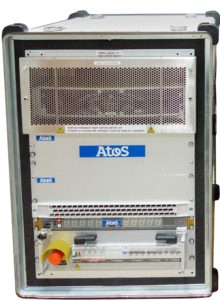
<p>I was previously involved as AIT Project Manager on the European Space Agency (ESA) Gaia project managing all flight hardware and test equipment, including the brainchild to develop a ‘dummy bench’ to the same scale as the flight Gaia telescope in order to facilitate wiring harnesses to be the exact length for the flight hardware, with the flexibility to add equipment as needed to verify the functionality of the satellite. My main responsibilities were specifying and procuring the EGSEs for both the spacecraft lower part (bus) and upper part (scientific telescope payload), developing the test scripts and managing the AIT (Assembly, Integration and Test) phase including budgets and resources.</p>
<p>This space telescope launched in 2013, has recently been in the news “ultimate book of the heavens – a catalogue of stars in our Milky Way Galaxy”, since it has plotted the precise positions of more than 1.8 billion stars and for most of these, it also knows their exact distance from Earth and their movement across the sky. (<a href="https://www.bbc.co.uk/news/science-environment-55178257">https://www.bbc.co.uk/news/science-environment-55178257</a>).</p>
<p><em><strong>What made you get into the space industry and start working with satellites?</strong></em></p>
<p>This was by pure chance, I was towards the end of my studies at Leeds University in the UK and saw an advert for a Graduate Manager scheme at Racal Defence in Leicester, where I was successful since I correctly answered the interview question about the ‘doppler effect’ leading to 2 years with the company as a C++ programmer and assigned to specific test areas pioneering JTAG technology.</p>
<p>I was headhunted by Airbus, Stevenage, UK for an interesting position involving JTAG and was then exposed to the space sector. I have also worked with Unmanned Air Vehicles (UAV) in 2009 at Cardington, near Bedford, UK as Hybrid Air Vehicles Programme Manager. This involved many cold long winter’s days testing the airships and we won the LEMV airship programme for the US Army. We had our successful first flight in September 2012.</p>
<p><em><strong>What are the future Electrical Ground Support Equipment (EGSE) trends in the space market?</strong></em></p>
<p>Atos is a global, multi-billion dollar company whose services include Cyber Security and Big Data, who in 2018 acquired the Space and Avionics group from Siemens. We are part of Public Safety and Security (PS&amp;D).</p>
<p>We make and supply EGSE and the market is moving from traditional ESA spacecraft progammes to satellite mega-constellations including Blue Origin, SpaceX, OneWeb and new ones on the horizon. A key change is the quantity traditionally required has been 3-8 EGSEs per programme, however now we supply 60-70 EGSEs called Power Special Check-Out Equipment (SCOEs) and 20 RF SCOE systems for the OneWeb programme.</p>
<p>The trend is definitely mass manufacturing/production of EGSE just like for the spacecraft market, where two spacecraft per day are typically produced (think about that – that is one per 8-hour shift!)</p>
<p>EGSE are needed at the early stages of the satellite programmes and we generally need the first sets of EGSE ready 7-8 months from project Kick-Off (KO). The commercial satellite market demands for satellite availability are also changing from the traditional 3-4 years ,to 1 -2 years from KO.</p>
<p>Manufacturing has to therefore adapt. We at Atos have been successful in fully digitised test systems and automated self-test equipment. The market is now for the mega-constellations with high demand in a short time.</p>
<p>ESA spacecraft programmes normally have full, very detailed specifications with clear project milestones such as Preliminary Design Review (PDR), Critical Design Review (CDR) and Final Delivery Review (FDR) etc. The commercial satellite programmes involve a more iterative process – not everything is finalised due to commercial time pressures where interfaces and functionality are constantly changing, some within weeks! Managing customer Change Requests effectively and smoothly with minimum cost impacts is the key to success.</p>
<figure id="attachment_29148" class="wp-caption alignright" style="width: 162px;" aria-describedby="caption-attachment-29148"><img loading="lazy" decoding="async" class=" wp-image-29148 tie-appear lazy-loaded" src="https://spacewatch.global/wp-content/uploads/2020/12/OneWeb-PWR-SCOE-220x300.jpg" sizes="(max-width: 220px) 100vw, 220px" srcset="https://spacewatch.global/wp-content/uploads/2020/12/OneWeb-PWR-SCOE-220x300.jpg 220w, https://spacewatch.global/wp-content/uploads/2020/12/OneWeb-PWR-SCOE-768x1047.jpg 768w, https://spacewatch.global/wp-content/uploads/2020/12/OneWeb-PWR-SCOE-751x1024.jpg 751w, https://spacewatch.global/wp-content/uploads/2020/12/OneWeb-PWR-SCOE-300x409.jpg 300w" alt="" width="162" height="221" data-lazy-type="image" data-src="https://spacewatch.global/wp-content/uploads/2020/12/OneWeb-PWR-SCOE-220x300.jpg" data-srcset="" /><figcaption id="caption-attachment-29148" class="wp-caption-text"><em>Power EGSE and UniverSAS – OneWeb PWR SCOE; Credits: ATOS</em></figcaption></figure>
<p>Our digital EGSE can be adapted quickly within weeks (rather than months) with the solutions developed, tested and available, therefore saving the satellite programme considerable time, thanks to our digital solutions.</p>
<p>The range of typical EGSE from Atos consists of</p>
<ul>
<li>POWER: Power/Battery Simulator SAS including Launch EGSE with Battery Charger features allowing tens of satellite batteries to be charged, trickle charged and monitored simultaneously.</li>
<li>RF: Payload and TT&amp;C test systems and RF Suitcases</li>
<li>INSTRUMENT: Bus and Loader (Solar Array flash test safe loads)</li>
<li>CCS: Central Checkout System</li>
</ul>
<figure id="attachment_29149" class="wp-caption alignright" style="width: 153px;" aria-describedby="caption-attachment-29149"><img loading="lazy" decoding="async" class=" wp-image-29149 tie-appear lazy-loaded" src="https://spacewatch.global/wp-content/uploads/2020/12/image-224x300.png" sizes="(max-width: 224px) 100vw, 224px" srcset="https://spacewatch.global/wp-content/uploads/2020/12/image-224x300.png 224w, https://spacewatch.global/wp-content/uploads/2020/12/image-300x402.png 300w, https://spacewatch.global/wp-content/uploads/2020/12/image.png 386w" alt="" width="153" height="205" data-lazy-type="image" data-src="https://spacewatch.global/wp-content/uploads/2020/12/image-224x300.png" data-srcset="" /><figcaption id="caption-attachment-29149" class="wp-caption-text"><em>RF Test EGSEs (Payload, TCR and TT&amp;C) – Payload System SCOE small Atos EGSE; Credits: ATOS</em></figcaption></figure>
<p>With our innovative multiplexing, we can interface with, say, 36 satellites simultaneously for battery charging, saving a lot of set-up and schedule time.</p>
<p><em><strong>I understand that Atos has developed its own product line for EGSE, can you tell me more?</strong></em></p>
<p>The first product, POWER Front End (Proust-FE), provides pyrotechnic and power supplies with highly accurate measurement systems for digital and analogue discrete measurements including also self-tests</p>
<p>Our new product, delivered in 2017 called ‘univerSAS®- Solar Array Simulator’ is a fully digital power supply with 7 KW power output, with version 2 in 2021 providing up to 16 KW. We have developed this product range due to the satellites becoming increasingly more powerful. They provide excellent measurement accuracy.</p>
<p>A key feature for OneWeb is the built-in scope measurements – you do not need a separate oscilloscope to perform measurements. Measurement plots are instantly made internally and there is no loss of signal or degradation which has proved to be a very useful feature.</p>
<figure id="attachment_29151" class="wp-caption alignright" aria-describedby="caption-attachment-29151"><img loading="lazy" decoding="async" class="size-medium wp-image-29151 lazy-loaded tie-appear" src="https://spacewatch.global/wp-content/uploads/2020/12/USAS_final-300x191.png" sizes="(max-width: 300px) 100vw, 300px" srcset="https://spacewatch.global/wp-content/uploads/2020/12/USAS_final-300x191.png 300w, https://spacewatch.global/wp-content/uploads/2020/12/USAS_final-768x488.png 768w, https://spacewatch.global/wp-content/uploads/2020/12/USAS_final-1024x650.png 1024w" alt="" width="300" height="191" data-lazy-type="image" data-src="https://spacewatch.global/wp-content/uploads/2020/12/USAS_final-300x191.png" data-srcset="" /><figcaption id="caption-attachment-29151" class="wp-caption-text"><em>USAS; Credits: ATOS</em></figcaption></figure>
<p>Our ‘univerSAS®is a fully digitised power supply. Design changes can be made much faster using software as opposed to requiring another production of test hardware.</p>
<p><em><strong>How do these products make your offerings competitive in the marketplace?</strong></em></p>
<p>Our key advantage is that previously supplied systems may consist of up to 3 Non-Commercial Off The Shelf (COTS) racks of equipment and these can be replaced within ½ an Atos equipment rack, with the added advantages of the ‘univerSAS®’ providing rear input and output panels for Power Distribution Unit (PDU) and encrypted device connections.</p>
<p>Compared to a traditional COTS system offered by our competitors, the Atos solution provides 2.5x less mass and size and therefore is significantly cheaper, with the added advantage from lower hardware costs, less space required and less import tax for satellite launch site processing. You can also easily move the EGSE with two people and a small van rather than transporting the larger COTS style EGSE using a forklift and truck for logistics.</p>
<p>Our competitive product range has been noticed by senior Airbus executives, in particular the power supply EGSE which is compact and lightweight– it is the industry’s biggest challenge to keep prices low and the industry cannot believe we at Atos achieved this. We did and it looks simple, however it is quite complicated on the inside!</p>
<p><em><strong>Ali, what are you most passionate about?</strong></em></p>
<p>I like the ‘buzz of meeting the customer demands’ to make sure the satellites are launched on time due to the tight timescales involved and the need to be an ‘outside of the box’ thinker for the Programme Management aspects and at the same time focus on the technical and human issues (e.g. visas for foreign market entry, staff medical exam needs, travel arrangements etc.) that make every day unique and exciting to go to work.</p>
<p>One of my passion is the deeper understanding of Psychology and Philosophy and it all started with my desire to understand the human behaviours in societies and organisations to enable and develop high performance teams and reduce loss of time in complex projects which leads to cost savings. The journey took me to places I would never have imagined and embarked on the journey to writing my first book “Path to Absolute Intelligence”.</p>
<p>I am currently a third of the way through writing the book which involves a 4-quadrant intelligence model I developed over a decade of research and describes the intelligence in the physical and the spiritual domain.</p>
<p>The interesting aspect of this is that is we use both of these domains in our daily lives, but we do not actually easily recognise this fact. We use a lot of our gut instincts (in the spiritual domain) for decision making. This can be attributed to a large element of faith or having a gut instinct when faced with challenges.</p>
<p>Different energy levels are involved, and it is harder to go from the negative to positive levels. Self-confidence is the key and maintaining a healthy mindset which leads to minimising the loss of time and productivity which is very important for project and programme management for senior executives.</p>
<p><em><strong>What are your hobbies and interests?</strong></em></p>
<p>I have four passions; travelling (I am currently exploring the world and on my 32<sup>nd</sup> country on the list!), understanding cultures and mindsets (I really enjoy the aspect of working in global operations involving many different cultures and how they operate holistically) and thirdly reading (I am an avid reader at least reading one book a week) and lastly I really enjoy cycling – I cycled from London to Paris in 2010.</p>
<p><em><strong>What would you like to say to the world?</strong></em></p>
<p>The phrase I would like to recommend to everyone is “<strong>kill your ego’s and experience the universe</strong>” it is very, very powerful, if you embrace it!</p>
<p>We are masters in clogging our minds with excess negative information created by our very own ego’s which are forever trying to please our never-ending desires, which I call noise. Just like any electronic device, the system will not operate efficiently unless you eliminate/minimise the noise. This applies to the human minds, the more noise your mind is processing, the less room you have for thinking clearly and listening to your inner gut instincts.</p>
<p class="name post-title entry-title"><em><strong>Blog kindly courtesy of SpaceWatchGL and Atos IT Solutions and Services GmbH</strong></em></p>
<p class="name post-title entry-title"><em><strong>#SpaceWatchGLInterviews:</strong></em></p>
<p class="name post-title entry-title"><em><strong>Ray Stott of SpaceSpecialists Ltd interviews Mohammed Ali of Atos IT Solutions and Services GmbH, co-produced by ATOS on behalf of SpaceWatchGL</strong></em></p>
<p><strong><a href="https://spacewatch.global/2020/12/spacewatchgl-interviews-mohammed-ali-of-atos-it-solutions-and-services-gmbh/?utm_campaign=G+-+BDS+-+MCS+-+ADE+General&amp;utm_content=&amp;utm_medium=linkedin&amp;utm_source=social">https://spacewatch.global/2020/12/spacewatchgl-interviews-mohammed-ali-of-atos-it-solutions-and-services-gmbh/?utm_campaign=G+-+BDS+-+MCS+-+ADE+General&amp;utm_content=&amp;utm_medium=linkedin&amp;utm_source=social</a></strong></p>
<p><img loading="lazy" decoding="async" class="alignnone wp-image-9257" src="https://spacespecialists.com/wp-content/uploads/2020/12/sw-global-header-2-1024x128.jpg" alt="" width="946" height="119" srcset="https://spacespecialists.com/wp-content/uploads/2020/12/sw-global-header-2-1024x128.jpg 1024w, https://spacespecialists.com/wp-content/uploads/2020/12/sw-global-header-2-300x38.jpg 300w, https://spacespecialists.com/wp-content/uploads/2020/12/sw-global-header-2-768x96.jpg 768w, https://spacespecialists.com/wp-content/uploads/2020/12/sw-global-header-2-1536x192.jpg 1536w, https://spacespecialists.com/wp-content/uploads/2020/12/sw-global-header-2.jpg 1600w" sizes="(max-width: 946px) 100vw, 946px" /></p>
<p style="text-align: center;"><strong><a href="https://spacewatch.global/">https://spacewatch.global/</a></strong></p>
<p style="text-align: center;"><strong><a href="https://atos.net/en/">https://atos.net/en/</a></strong></p>
]]></content>
		
					<link rel="replies" type="text/html" href="https://spacespecialists.com/site-blog/spacewatchgl-interview/#comments" thr:count="0" />
			<link rel="replies" type="application/atom+xml" href="https://spacespecialists.com/site-blog/spacewatchgl-interview/feed/atom/" thr:count="0" />
			<thr:total>0</thr:total>
			</entry>
		<entry>
		<author>
			<name>SpaceSpecialists</name>
					</author>

		<title type="html"><![CDATA[CranSEDS &#8211; Space Robotics Talk with Ray Stott]]></title>
		<link rel="alternate" type="text/html" href="https://spacespecialists.com/events/cranseds-space-robotics-talk-by-ray-stott/" />

		<id>https://spacespecialists.com/?p=9119</id>
		<updated>2024-01-17T00:54:42Z</updated>
		<published>2020-12-17T03:49:05Z</published>
		<category scheme="https://spacespecialists.com" term="Events" /><category scheme="https://spacespecialists.com" term="News" /><category scheme="https://spacespecialists.com" term="robotics" />
		<summary type="html"><![CDATA[CranSEDS - Space Robotics Talk by Ray Stott, SpaceSpecialists Ltd 22nd December 2020 6 - 7.30 PM UK GMT Zoom Invite Topic: CranSEDS - Space Robotics Talk by Ray Stott, SpaceSpecialists Ltd Time: Dec 22, 2020 06:00 PM London Join Zoom Meeting https://cranfield.zoom.us/j/88381706698?pwd=VXh3N0xGd1RXY2JDakQwRzNiN2RiZz09 Meeting ID: 883 8170 6698 Introduction Ray Stott background raystott@spacespecialists.com https://www.linkedin.com/in/raystott/ https://spacespecialists.com/ray-stott/ &#160; &#160; &#160; SpaceSpecialists Ltd&#160;<a href="https://spacespecialists.com/events/cranseds-space-robotics-talk-by-ray-stott/" class="read-more">Continue Reading</a>]]></summary>

					<content type="html" xml:base="https://spacespecialists.com/events/cranseds-space-robotics-talk-by-ray-stott/"><![CDATA[<h4 style="text-align: center;"><strong>CranSEDS - Space Robotics Talk by Ray Stott, SpaceSpecialists Ltd</strong></h4>
<h4 style="text-align: center;"><strong>22nd December 2020</strong></h4>
<h4 style="text-align: center;"><strong>6 - 7.30 PM UK GMT</strong></h4>
<h2><strong>Zoom Invite</strong></h2>
<p><strong>Topic: CranSEDS - Space Robotics Talk by Ray Stott, SpaceSpecialists Ltd</strong></p>
<p><strong>Time: Dec 22, 2020 06:00 PM London</strong></p>
<p><strong>Join Zoom Meeting</strong></p>
<p><strong><a href="https://cranfield.zoom.us/j/88381706698?pwd=VXh3N0xGd1RXY2JDakQwRzNiN2RiZz09">https://cranfield.zoom.us/j/88381706698?pwd=VXh3N0xGd1RXY2JDakQwRzNiN2RiZz09</a></strong></p>
<p><strong>Meeting ID: 883 8170 6698</strong></p>
<h2></h2>
<h2><strong>Introduction</strong></h2>
<ul>
<li>
<h3><strong>Ray Stott background</strong></h3>
</li>
</ul>
<p><img loading="lazy" decoding="async" class="size-full wp-image-9172 aligncenter" src="https://spacespecialists.com/wp-content/uploads/2020/12/a.jpg" alt="" width="1019" height="573" srcset="https://spacespecialists.com/wp-content/uploads/2020/12/a.jpg 1019w, https://spacespecialists.com/wp-content/uploads/2020/12/a-300x169.jpg 300w, https://spacespecialists.com/wp-content/uploads/2020/12/a-768x432.jpg 768w" sizes="(max-width: 1019px) 100vw, 1019px" /></p>
<p style="text-align: center;"><strong><a href="raystott@spacespecialists.com">raystott@spacespecialists.com</a></strong></p>
<p style="text-align: center;"><strong><a href="https://www.linkedin.com/in/raystott/">https://www.linkedin.com/in/raystott/</a></strong></p>
<p style="text-align: center;"><strong><a href="https://spacespecialists.com/ray-stott/">https://spacespecialists.com/ray-stott/</a></strong></p>
<p><img loading="lazy" decoding="async" class="size-full wp-image-9171 aligncenter" src="https://spacespecialists.com/wp-content/uploads/2020/12/b.jpg" alt="" width="944" height="492" srcset="https://spacespecialists.com/wp-content/uploads/2020/12/b.jpg 944w, https://spacespecialists.com/wp-content/uploads/2020/12/b-300x156.jpg 300w, https://spacespecialists.com/wp-content/uploads/2020/12/b-768x400.jpg 768w" sizes="(max-width: 944px) 100vw, 944px" /></p>
<p>&nbsp;</p>
<p><img loading="lazy" decoding="async" class="size-full wp-image-9168 aligncenter" src="https://spacespecialists.com/wp-content/uploads/2020/12/e.jpg" alt="" width="941" height="492" srcset="https://spacespecialists.com/wp-content/uploads/2020/12/e.jpg 941w, https://spacespecialists.com/wp-content/uploads/2020/12/e-300x157.jpg 300w, https://spacespecialists.com/wp-content/uploads/2020/12/e-768x402.jpg 768w" sizes="(max-width: 941px) 100vw, 941px" /></p>
<p>&nbsp;</p>
<p>&nbsp;</p>
<ul>
<li>
<h3><strong>SpaceSpecialists Ltd</strong></h3>
</li>
</ul>
<p>&nbsp;</p>
<p style="text-align: center;"><strong><a href="https://spacespecialists.com/">https://spacespecialists.com/</a></strong></p>
<p>&nbsp;</p>
<p><img loading="lazy" decoding="async" class="size-full wp-image-9197 aligncenter" src="https://spacespecialists.com/wp-content/uploads/2020/12/10-1.jpg" alt="" width="827" height="572" srcset="https://spacespecialists.com/wp-content/uploads/2020/12/10-1.jpg 827w, https://spacespecialists.com/wp-content/uploads/2020/12/10-1-300x207.jpg 300w, https://spacespecialists.com/wp-content/uploads/2020/12/10-1-768x531.jpg 768w" sizes="(max-width: 827px) 100vw, 827px" /></p>
<p>&nbsp;</p>
<ul>
<li>
<h3><strong>SpaceMates Online</strong></h3>
</li>
</ul>
<p><img loading="lazy" decoding="async" class="wp-image-8735 aligncenter" src="https://spacespecialists.com/wp-content/uploads/2020/11/main-graphic-spacemates-online-master-1024x582.png" alt="" width="652" height="370" srcset="https://spacespecialists.com/wp-content/uploads/2020/11/main-graphic-spacemates-online-master-1024x582.png 1024w, https://spacespecialists.com/wp-content/uploads/2020/11/main-graphic-spacemates-online-master-300x170.png 300w, https://spacespecialists.com/wp-content/uploads/2020/11/main-graphic-spacemates-online-master-768x436.png 768w, https://spacespecialists.com/wp-content/uploads/2020/11/main-graphic-spacemates-online-master.png 1158w" sizes="(max-width: 652px) 100vw, 652px" /></p>
<p style="text-align: center;"><strong><a href="https://spacespecialists.com/next-event/">https://spacespecialists.com/next-event/</a></strong></p>
<p>&nbsp;</p>
<ul>
<li>
<h3><strong>Ray's knowledge of robotics through career &amp; projects</strong></h3>
</li>
</ul>
<p>&nbsp;</p>
<p><img loading="lazy" decoding="async" class="size-full wp-image-9167 aligncenter" src="https://spacespecialists.com/wp-content/uploads/2020/12/1-1.jpg" alt="" width="786" height="579" srcset="https://spacespecialists.com/wp-content/uploads/2020/12/1-1.jpg 786w, https://spacespecialists.com/wp-content/uploads/2020/12/1-1-300x221.jpg 300w, https://spacespecialists.com/wp-content/uploads/2020/12/1-1-768x566.jpg 768w" sizes="(max-width: 786px) 100vw, 786px" /></p>
<p><img loading="lazy" decoding="async" class="size-full wp-image-9166 aligncenter" src="https://spacespecialists.com/wp-content/uploads/2020/12/2-1.jpg" alt="" width="806" height="585" srcset="https://spacespecialists.com/wp-content/uploads/2020/12/2-1.jpg 806w, https://spacespecialists.com/wp-content/uploads/2020/12/2-1-300x218.jpg 300w, https://spacespecialists.com/wp-content/uploads/2020/12/2-1-768x557.jpg 768w" sizes="(max-width: 806px) 100vw, 806px" /></p>
<p><img loading="lazy" decoding="async" class="size-full wp-image-9165 aligncenter" src="https://spacespecialists.com/wp-content/uploads/2020/12/3-1.jpg" alt="" width="784" height="574" srcset="https://spacespecialists.com/wp-content/uploads/2020/12/3-1.jpg 784w, https://spacespecialists.com/wp-content/uploads/2020/12/3-1-300x220.jpg 300w, https://spacespecialists.com/wp-content/uploads/2020/12/3-1-768x562.jpg 768w" sizes="(max-width: 784px) 100vw, 784px" /></p>
<h2></h2>
<h2><strong>Space Robotics Talk Overview</strong></h2>
<ol>
<li>What is a Robot?</li>
<li>Space robotics
<ol>
<li>International Space Station (ISS)</li>
<li>Planetary rovers</li>
<li>Submarine robots</li>
<li>Aerial robots</li>
<li>Satellites</li>
<li>Deep space probes</li>
<li>Extra-Vehicular Activity (EVA) robots</li>
<li>Intra-Vehicular Activity (IVA) robots</li>
<li>Exploration robotics</li>
</ol>
</li>
<li>Humans and robotics working together</li>
<li>Autonomy (autonomous or semi-autonomous control)</li>
<li>Control/Feedback control loop</li>
<li>Haptic control</li>
<li>Degrees of Freedom (DOFs)</li>
<li>Robotic joints</li>
<li>Actuators</li>
<li>Locomotion</li>
<li>Sensors</li>
<li>Computer</li>
<li>Electronics</li>
<li>Software</li>
<li>Artificial Intelligence (AI)</li>
<li>Machine Learning (ML)</li>
<li>Time delays due to distance</li>
<li>Testing
<ol>
<li>Hardware in the loop test</li>
<li>Software in the loop test</li>
<li>Environmental testing</li>
</ol>
</li>
<li>Launch</li>
<li>Operations</li>
<li>End of Life</li>
<li>Space/Planetary Bodies/Other Environments
<ol>
<li>Radiation</li>
<li>Atmosphere</li>
<li>Space vacuum</li>
<li>Thermal control</li>
</ol>
</li>
<li>Past, current and future projects</li>
<li>Challenges &amp; Problems</li>
<li>R&amp;D</li>
<li>Issues</li>
<li>Industry landscape
<ol>
<li>UK
<ol>
<li>FAIR-SPACE</li>
</ol>
</li>
<li>Europe</li>
<li>Worldwide</li>
</ol>
</li>
<li>The latest news on space robotics</li>
<li>Job opportunities</li>
<li>Q/A</li>
</ol>
<p>&nbsp;</p>
<h2><strong>CranSEDS</strong></h2>
<p>&nbsp;</p>
<p><img loading="lazy" decoding="async" class="wp-image-9125 aligncenter" src="https://spacespecialists.com/wp-content/uploads/2020/12/cranpic6.png" alt="" width="352" height="115" /></p>
<p>&nbsp;</p>
<p><strong>CranSEDS</strong> is Cranfield’s local chapter of <strong>UKSEDS</strong>, made up of around 100 enthusiastic students who are dedicated to the development of space technologies. Most of our participants come from the prestigious MSc in Astronautics and Space Engineering, but we have a number of other members from disciplines such as Robotics, Computational Fluid Dynamics, Thermal power etc. contributing towards a vastly varied and knowledgeable team.</p>
<p><strong>CranSEDS</strong> are getting involved in a variety of different projects this year, from international rocketry competitions to STEM outreach and engagement programmes for local schools.</p>
<p>We have a very strong heritage of competing in these sorts of competitions, notably winning the <strong>National Rocketry Championship</strong> last year</p>
<p><strong><a href="https://ukseds.org/2020/08/national-rocketry-championship-winners-2019-20/">https://ukseds.org/2020/08/national-rocketry-championship-winners-2019-20/</a></strong></p>
<p>and winning the ‘<strong>Small Sats – The Next Generation</strong>’ competition in 2017 hosted by SSPI and UKSEDS</p>
<p><strong><a href="https://www.sspi.org/articles/cranseds-team-designs-global-polar-communication-services-constellation">https://www.sspi.org/articles/cranseds-team-designs-global-polar-communication-services-constellation</a></strong></p>
<p>Here are some examples of the work we are doing in 2021</p>
<ol>
<li><strong>International Competitions</strong>
<ul>
<li><strong>European Rocketry Competition</strong> (EuRoC): Our mission is to launch a rocket carrying a 4kg payload at a precise altitude of 10,000 ft above Portugal before getting safely recovered with a series of parachutes</li>
</ul>
</li>
</ol>
<ol start="2">
<li><strong>National Competitions</strong>
<ul>
<li><strong>UK National Rocketry Championship</strong>: To design and build a rocket to reach the highest apogee possible using any 29mm Cessaroni 2-grain motor with a required payload</li>
<li><strong>Olympus Rover Trials</strong>: To design, construct and operate a rover for a habitat construction mission on Mars to a set of real space mission requirements</li>
<li><strong>Satellite Design Competition</strong>: To design, construct and operate a 3U CubeSat payload system with the objective to acquire as much information from an analogue lunar nanosatellite mission</li>
</ul>
</li>
</ol>
<p>&nbsp;</p>
<p><img loading="lazy" decoding="async" class="size-full wp-image-9124 aligncenter" src="https://spacespecialists.com/wp-content/uploads/2020/12/cranpic5.png" alt="" width="602" height="186" srcset="https://spacespecialists.com/wp-content/uploads/2020/12/cranpic5.png 602w, https://spacespecialists.com/wp-content/uploads/2020/12/cranpic5-300x93.png 300w" sizes="(max-width: 602px) 100vw, 602px" /></p>
<p>&nbsp;</p>
<ol start="3">
<li><strong>Research Division</strong>
<ul>
<li><strong>Hybrid Motor Test Stand</strong>: To develop Cranfield’s existing Hybrid Rocket Engine design and Lay the foundations to create a competitive rocketry team at an international level.</li>
</ul>
</li>
</ol>
<ol start="4">
<li><strong>Conferences</strong>
<ul>
<li><strong>UK Space Day Conference</strong>: To organise and deliver 'The Space of Tomorrow: From Vostok to Artemis', where we are trying to get a diverse panel of experts to give talks about their experiences within the space industry, and how they think this has shaped the future of space technology and exploration.</li>
</ul>
</li>
</ol>
<ol start="5">
<li><strong>STEM Engagement</strong>
<ul>
<li><strong>STEM Engagement</strong>: We are planning on visiting local schools within the Bedfordshire area to raise interest for space through interactive lectures and workshops that enable the children to explore their imagination and create their own rocket models with common home materials, whilst learning something too!</li>
</ul>
</li>
</ol>
<p>&nbsp;</p>
<p><img loading="lazy" decoding="async" class="wp-image-9123 aligncenter" src="https://spacespecialists.com/wp-content/uploads/2020/12/cranpic4.jpg" alt="" width="507" height="285" srcset="https://spacespecialists.com/wp-content/uploads/2020/12/cranpic4.jpg 602w, https://spacespecialists.com/wp-content/uploads/2020/12/cranpic4-300x168.jpg 300w" sizes="(max-width: 507px) 100vw, 507px" /></p>
<p>&nbsp;</p>
<h2><strong>Cranfield University</strong></h2>
<p><strong>Cranfield University</strong> has remained consistently in the top 50 in QS World University Rankings for the last 7 years in the fields of Mechanical, Aeronautics and Manufacturing Engineering, being the 5th UK University after Oxford, Cambridge, Imperial College London and Manchester.</p>
<p>&nbsp;</p>
<p><img loading="lazy" decoding="async" class="wp-image-9144 aligncenter" src="https://spacespecialists.com/wp-content/uploads/2020/12/Cranfield-Logo-V2.png" alt="" width="275" height="153" srcset="https://spacespecialists.com/wp-content/uploads/2020/12/Cranfield-Logo-V2.png 900w, https://spacespecialists.com/wp-content/uploads/2020/12/Cranfield-Logo-V2-300x167.png 300w, https://spacespecialists.com/wp-content/uploads/2020/12/Cranfield-Logo-V2-768x427.png 768w" sizes="(max-width: 275px) 100vw, 275px" /></p>
<p>&nbsp;</p>
<p><strong>Cranfield</strong> is a six-time winner of the Queen's Anniversary Prize, which is the highest award in the UK for higher educational institutions. It is ranked in the top ten UK universities for commercial research, consultancy and professional development and the Times Higher Education ranked it first in the UK for research income per academic in 2017.</p>
<p>Although <strong>Cranfield</strong> is located in the rural English countryside, it still boasts a number of facilities such as its own airport, sports and recreational grounds, supermarkets, a church and of course, two great British pubs!</p>
<p><img loading="lazy" decoding="async" class="wp-image-9122 aligncenter" src="https://spacespecialists.com/wp-content/uploads/2020/12/cranpic3.png" alt="" width="517" height="258" srcset="https://spacespecialists.com/wp-content/uploads/2020/12/cranpic3.png 601w, https://spacespecialists.com/wp-content/uploads/2020/12/cranpic3-300x150.png 300w, https://spacespecialists.com/wp-content/uploads/2020/12/cranpic3-100x50.png 100w" sizes="(max-width: 517px) 100vw, 517px" /></p>
<p><em><strong>Cranfield University</strong> is located at  College Rd, Cranfield, Wharley End, Bedford MK43 0AL, UK</em></p>
<p><img loading="lazy" decoding="async" class="wp-image-9121 aligncenter" src="https://spacespecialists.com/wp-content/uploads/2020/12/cranpic2.png" alt="" width="508" height="285" srcset="https://spacespecialists.com/wp-content/uploads/2020/12/cranpic2.png 601w, https://spacespecialists.com/wp-content/uploads/2020/12/cranpic2-300x168.png 300w" sizes="(max-width: 508px) 100vw, 508px" /></p>
<p>&nbsp;</p>
<h2><b>Links</b></h2>
<p>Follow us on our social media platforms to keep up with project developments and follow the future series of talks about various space topics!</p>
<p><img loading="lazy" decoding="async" class="wp-image-9120 aligncenter" src="https://spacespecialists.com/wp-content/uploads/2020/12/canpic1.png" alt="" width="297" height="234" srcset="https://spacespecialists.com/wp-content/uploads/2020/12/canpic1.png 345w, https://spacespecialists.com/wp-content/uploads/2020/12/canpic1-300x237.png 300w" sizes="(max-width: 297px) 100vw, 297px" /></p>
<p><strong><a href="http://cranseds.co.uk">http://cranseds.co.uk</a></strong></p>
<p><strong><a href="http://facebook.com/cranSEDS">http://facebook.com/cranSEDS</a></strong></p>
<p><strong><a href="https://www.instagram.com/cranseds/">https://www.instagram.com/cranseds/</a></strong></p>
<p><strong><a href="https://twitter.com/CranSEDS">https://twitter.com/CranSEDS</a></strong></p>
<p><strong><a href="http://linkedin.com/company/cranseds">http://linkedin.com/company/cranseds</a></strong></p>
<p>Also, feel free to email any of the <strong>committee members</strong> if you want more information, or want to get involved through sponsorship opportunities to support any of the projects!</p>
<p><strong>Alejandra Martínez Fariña</strong></p>
<ul>
<li><a href="mailto:alejandra.martinez-farina@cranfield.ac.uk">martinez-farina@cranfield.ac.uk</a></li>
<li><a href="https://www.linkedin.com/in/alejandra-mart%C3%ADnez-fari%C3%B1a/">https://www.linkedin.com/in/alejandra-mart%C3%ADnez-fari%C3%B1a/</a></li>
</ul>
<p><strong>Gonzalo LLarena</strong></p>
<ul>
<li><a href="mailto:g.llarena@cranfield.ac.uk">llarena@cranfield.ac.uk</a></li>
<li><a href="https://www.linkedin.com/in/gonzalo-llarena-espinosa-782a6b164/">https://www.linkedin.com/in/gonzalo-llarena-espinosa-782a6b164/</a></li>
</ul>
<p><strong>Itziar Losa Miguela</strong></p>
<ul>
<li><a href="itziar.losa-miguela@cranfield.ac.uk">itziar.losa-miguela@cranfield.ac.uk</a></li>
<li><a href="https://www.linkedin.com/in/itziarlosamiguela/">https://www.linkedin.com/in/itziarlosamiguela/</a></li>
</ul>
<p><strong>Sam Juson</strong></p>
<ul>
<li><a href="mailto:s.juson@cranfield.ac.uk">juson@cranfield.ac.uk</a></li>
<li><a href="https://www.linkedin.com/in/sam-juson/">https://www.linkedin.com/in/sam-juson/</a></li>
</ul>
<p>&nbsp;</p>
<h4><strong>Blog written by Ray Stott &amp; </strong><strong>Sam Juson</strong></h4>
<p><img loading="lazy" decoding="async" class="wp-image-9188 aligncenter" src="https://spacespecialists.com/wp-content/uploads/2020/12/both.jpg" alt="" width="508" height="284" srcset="https://spacespecialists.com/wp-content/uploads/2020/12/both.jpg 1023w, https://spacespecialists.com/wp-content/uploads/2020/12/both-300x168.jpg 300w, https://spacespecialists.com/wp-content/uploads/2020/12/both-768x429.jpg 768w" sizes="(max-width: 508px) 100vw, 508px" /></p>
<p>&nbsp;</p>
<p><strong>Sam Juson</strong>, BEng Aerospace Engineering with Pilot Studies graduate studying his MSc in Astronautics and Space Engineering at Cranfield University. <strong>Current Co-President at CranSEDS.</strong></p>
]]></content>
		
					<link rel="replies" type="text/html" href="https://spacespecialists.com/events/cranseds-space-robotics-talk-by-ray-stott/#comments" thr:count="0" />
			<link rel="replies" type="application/atom+xml" href="https://spacespecialists.com/events/cranseds-space-robotics-talk-by-ray-stott/feed/atom/" thr:count="0" />
			<thr:total>0</thr:total>
			</entry>
	</feed>