


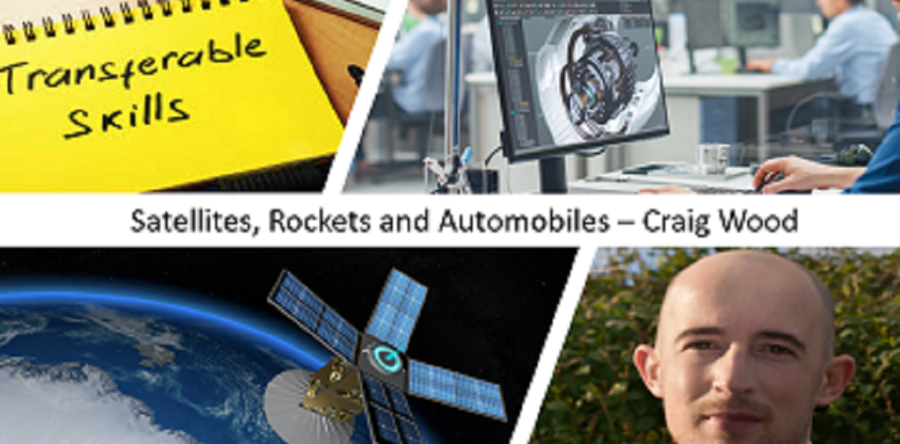
Earth to Space – Transferable Skills

Introduction
Whatever your background and experience level, getting into the Space industry is a dream for some people, and with the space industry in the UK expanding each year, more job opportunities are being created, but transferring, even starting out on this career path is not always easy.
The common problem that everyone has come across at some point in the lifetime is: you need the experience to get the job, but the job to get the experience. Transferable skills could be your answer. If you can highlight the necessary transferable skills from previous experiences and education, it will allow you to stand out from other candidates.
Having a lack of industry experience is not ideal when applying for a role, however, the right transferable skills can, in some cases, make up for the shortage of experience. Many different skills can be transferable depending on the role requirements, the two categories of skills are soft skills and hard skills.
Hard skills are acquired through training and education such as reading, writing, or computer programming. Soft skills, on the other hand, cannot be measured and are built over time, such as teamwork, attention to detail, or problem-solving.

Space Business
The space industry has changed dramatically in the last sixty years since Sputnik One was first launched in 1957. The technology required for space travel has progressed and reduced in cost and now is more commercial than ever. Hundreds of large, medium, and small startup businesses and bigger corporations are benefiting from these new and exciting opportunities.
Just like any other industry certain areas and roles need to be fulfilled within a business for it to run smoothly. Administrative roles like accounting and human resources utilize skills similar to other industries therefore are very transferable.
IT support is another area that requires skills needed for any business. Managing and storing the amount of data that is required, not only for company records but the sheer mass of data needed for space-related projects.
Another field of expertise that is required is law. Areas of law like administrative law and insurance law are integral to any successful business but other areas such as intellectual property law and environmental law are also required for the technology developed from space organizations.

Engineering
Engineering is a major aspect of the space industry, encompassing many different disciplines including mechanical, electronics, and software engineering. Many of the skills and techniques developed in these areas are similar in other industries but with different applications and challenges. For example, the modeling software for mechanical design will be the same in all engineering organizations but how is it utilized and what is being designed will differ.
The difference in the space industry is the unique operating environment for many systems. The extreme levels of radiation beyond Earth’s protective atmosphere can have considerable effects on material properties and individual components, which all need to be taken into consideration in the initial design phases of a project.
Before the satellite or any spacecraft can start its mission it first must be launched from the surface of the Earth. This alone is a task in itself. The forces during a launch can damage or destroy payload if the structure is not designed correctly, therefore spacecraft may need to be over-engineered for the primary purpose. Also, due to the large cost of launching, weight must be kept to a minimum. Here lies the challenge, fortunately, the techniques used to reduce weight while maintaining structural strength are commonly used in other engineering fields such as Aerospace and Automotive to save manufacturing costs or increase efficiency.
Other unique engineering challenges related to the space industry include extreme operating temperatures or differences in gravitational forces that could affect mechanical or electrical functionality. This is not all only a challenge during design but also testing, especially microgravity environments.

Currently, one of the most desired skills required in the space industry is computer programming. According to surveys carried out by the 'Space Skills Alliance' organisation, over 50% of all jobs in the space sector are looking for some level of computer programming. There are a variety of different programming languages required, with the most common being Python and C++. These skills can be acquired in any industry or even self-taught.
Transferring skills and techniques from and to the space industry is essential, not only for the space industry but for other industries, to expand and develop. Certain business models may have characteristics and experience that could help each other, one example of this is mass production. Industries like automotive have had years of experience dealing with the mass production of vehicles from an engineering and logistical perspective. These skills and techniques will be vital for mass production of space technologies to reduce costs and lead times and with the space industry expanding rapidly, these skills are needed today.
As interesting new technologies are invented in all industries around the world, the applications for these technologies grow beyond initial purpose. For example, Reaction Engines are working on propulsion technology and have produced advanced cooling technology that is now finding use in Formula 1. This has opened opportunities for people with experience in F1 to work and develop this technology further.
Future
As the space industry expands and technology advances, opportunities are being created that were not imaginable just a few decades ago.
One interesting area that has received a lot of media attention is space tourism. Companies like Virgin Galactic and Blue Origin are investing large amounts of money into the goal of profiting from space tourism. This will open up a demand for services in advertising and marketing as this unique leisure sector develops.

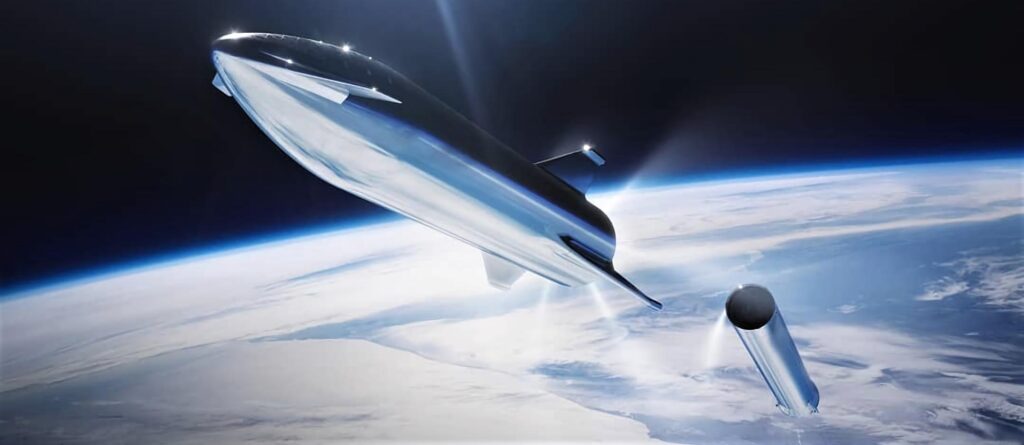
Space travel is also growing as the price of launch reduces. SpaceX has reduced the price per kilo from an average of $18,500 between 1970 and 2000 to $2,720, allowing for more ambitious missions to be considered. Sending humans to Mars is a huge objective for SpaceX and along with this being a great achievement for mankind, will require other skills and knowledge. Sending a human being to another planetary body will not only be a huge engineering challenge but a medical one as well. Nutritionists, physiotherapists, psychiatrists and other related professions will all need to be taken on board to assess and prepare the first astronauts to voyage to Mars.

Final Thoughts
Some of the most desired and sought after skills by the space sector are transferable, hard skills like computer programming and other interpersonal and communication soft skills can all be acquired from other backgrounds. For employers, finding someone suited to a position with every desired skill and experience level can be a challenge and sometimes an impossible task, meaning compromises being made for certain criteria.
Currently, the space sector is growing rapidly in the UK amidst a global pandemic, prompting the UK government to invest a significant amount of money in expanding the industry even further. Together with a skills shortage highlighted by the 'Space Skills Alliance' organisation in several key areas, means the space sector needs skilled workers to fulfil necessary roles.

Space Skills Alliance (SSA) Census to be filled in by interested space parties.

"We know very little about the space workforce. We don’t have enough data on why people join our sector, or why they leave. We don’t have enough data on how people are progressing their careers, or how we can help them."
Blog written by Craig Wood
Craig is available immediately for opportunities in the UK and Europe - check his profile and experience on our 'Consultants' webpage on the SpaceSpecialists website here
https://spacespecialists.com/craig-wood/
LinkedIn profile
https://www.linkedin.com/in/craigwwood/

Craig is a highly motivated Engineer with five years of experience in the automotive industry as a Project Engineer and Mechanical Engineer. He is very enthusiastic in the space industry, having achieved a 1st class degree with honours at the University of Hertfordshire in Aerospace Engineering with Space Technology.
He is looking to transfer the skills and techniques developed in his professional and educational background into the space industry to make a difference as the world moves forwards and upwards.
Get in touch!


